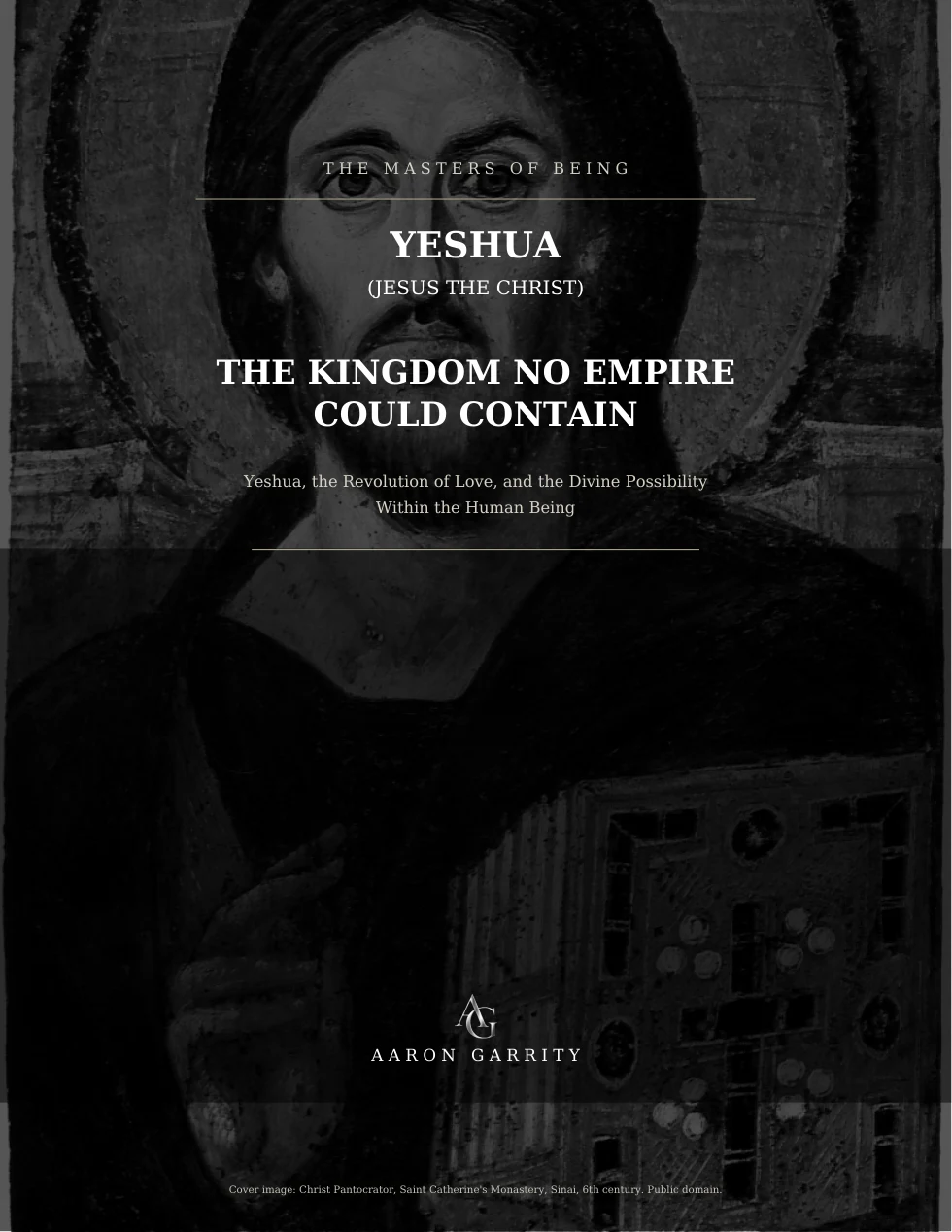
PROLOGUE
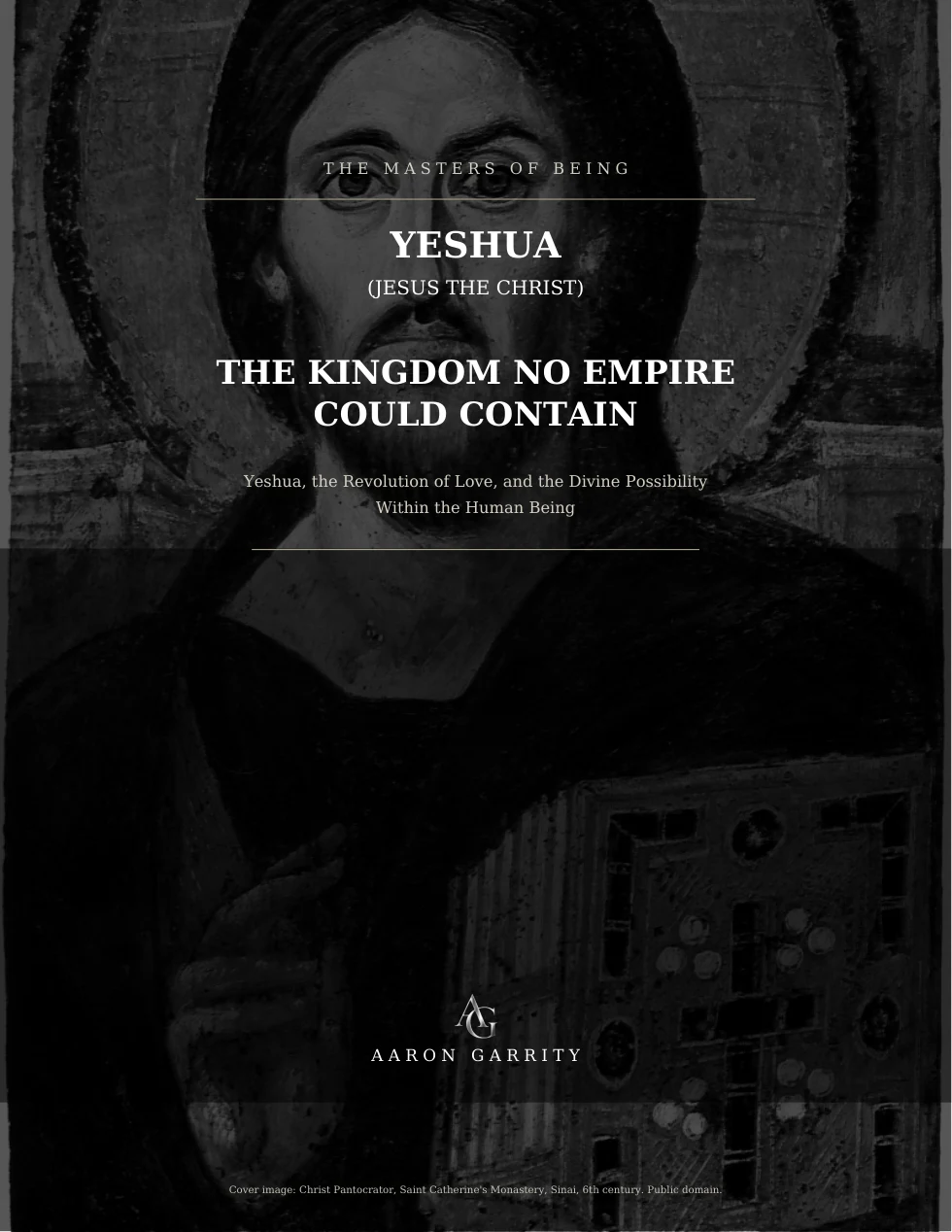
The Man No Empire Understood
The governor and the prisoner stood facing one another.
One possessed soldiers, courts, titles, and the authority of Rome. The other had been arrested in darkness, abandoned by many of his followers, interrogated through the night, and delivered into the hands of an empire that specialized in making examples of men like him.
With a word, Pontius Pilate could release a prisoner, condemn him, or summon armed men.
Behind him stood Caesar, and behind Caesar stood the machinery of conquest: legions, taxation, spectacle, intimidation, and the carefully cultivated belief that Roman power was permanent.
Before him stood Yeshua.
He had no army, no office, and no institution behind him.
He had not conquered a city, commanded a soldier, or accumulated the visible instruments through which history is supposedly made. His closest companions were fishermen, laborers, women, political outsiders, and men whose courage was already beginning to fail them. One disciple had betrayed him. Another would deny knowing him. Soon, nearly everyone who had celebrated his arrival in Jerusalem would disappear into the safety of the crowd.
By every measurement available to Rome, Pilate was the powerful man.
Yeshua was the defeated one.
And yet, two thousand years later, the prisoner remains more alive in the human imagination than the governor who sentenced him.
Pilate is remembered primarily because he once stood in the presence of Yeshua.
That reversal contains the beginning of everything.
Rome understood the power to command, but not the power to awaken. It understood the authority to punish, but not the authority carried by a human being who could no longer be frightened into betraying himself. It understood how to occupy territory, collect tribute, suppress rebellion, and crucify bodies along public roads.
What it could not understand was a kingdom that required no territory.
It could not comprehend a sovereignty located within the human being.
It did not know what to do with a man who would not seize power, bow before power, or allow power to determine who he was.
Pilate questioned Yeshua as though the prisoner's life depended upon providing the correct answers. But beneath the visible interrogation, another judgment was taking place. The empire was standing before a different standard of authority — and it did not recognize that it, too, was being revealed.
Pilate reportedly asked, "What is truth?"
It may be one of history's most consequential questions. Yet the tragedy is not that Pilate lacked an answer. The tragedy is that he asked the question while looking directly at a life that had become an answer — and then turned away.
Perhaps this is still the human condition.
We ask for truth while resisting the life truth would require of us.
We construct doctrines around men whose courage we admire so that we will not have to reproduce their courage. We praise those who surrendered everything while continuing to negotiate the terms of our own surrender. We turn revelation into institution, institution into identity, and identity into a boundary separating the saved from the condemned.
Then we call the boundary holy.
Yeshua has been adored for centuries. But adoration and understanding are not the same.
He has been painted, sculpted, preached, defended, politicized, commercialized, sentimentalized, and placed at the center of civilizations whose conduct often contradicted his own. His cross has been carried by saints and armies, mystics and monarchs, healers and inquisitors. It has comforted the dying, inspired the oppressed, justified conquest, adorned cathedrals, hung above hospital beds, and rested against the chests of people who rarely considered what it might ask of them.
The most recognizable person in Western civilization may also be among its most obscured.
This did not happen only because institutions corrupted him. That explanation is too simple. Institutions preserved stories that might otherwise have disappeared. Communities carried his teachings across continents and centuries. Monks, scholars, mothers, martyrs, artists, reformers, and ordinary believers kept his presence alive through war, persecution, collapse, and time.
Christianity has produced breathtaking acts of courage, mercy, beauty, sacrifice, and service.
It has also sometimes committed the ancient error of every empire: attempting to possess what can only be entered.
The Kingdom Yeshua announced could not be contained by Rome. It cannot be contained by Christianity either.
That is not an argument against Christianity. It is a recognition of the immensity of the Christ.
Yeshua did not spend his life constructing an idol of himself. He turned attention toward the Father, toward the Kingdom, and toward the change required within the person hearing him. Yet history has often made an image of the teacher easier to adore than the way of being he embodied. An idol asks for reverence. A living teaching asks for participation.
The distinction matters.
There is the historical Yeshua: a Jewish teacher formed within the spiritual world of Israel, walking through Galilee and Judea under Roman occupation. He spoke of God, Torah, justice, mercy, repentance, forgiveness, and a Kingdom already drawing near. He touched people others considered unclean. He ate with the morally suspect. He treated women with a dignity that unsettled the social order around him. He confronted religious hypocrisy, warned against the seductions of wealth, and refused the forms of domination by which power usually preserves itself.
There is also the institutional Jesus: the figure interpreted through creeds, councils, denominations, empires, translations, rituals, political movements, and centuries of theological conflict. This Jesus has been used to bless both peace and war, liberation and subjugation, radical compassion and merciless judgment.
And there is the living Christ: the presence that cannot be confined to the past, the institution, or the argument.
These are not three different beings. They are three dimensions of humanity's encounter with one mystery. Yet when they are collapsed carelessly into one another, we lose our ability to see what happened. The historical man disappears beneath the monument. The institution claims ownership of the infinite. The living Christ becomes either a doctrinal possession or a vague spiritual metaphor.
This work will attempt neither. It will not strip Yeshua of divinity to make him acceptable to the modern mind, nor use divinity to protect him from serious examination. Where history leaves uncertainty, mystery will remain mystery. Contemporary convictions will not be placed into the mouth of a first-century teacher.
But neither will it approach him as though he were merely an artifact.
Yeshua does not belong only to historians and theologians. He belongs wherever a person enters the wilderness without applause, certainty, position, or control; wherever a father confronts the unfinished parts of himself, a leader discovers that influence can serve either ego or humanity, or success fails to answer what cannot be bought.
He belongs to those whose lives have been dismantled in a day: death arriving, loyalties collapsing, financial structures failing, familiar futures disappearing almost simultaneously. He belongs to the person who fights reality for years before finally whispering, exhausted and perhaps for the first time honestly:
I will follow.
Not because the path has become clear or the suffering explained, but because resistance has finally surrendered its claim to sovereignty.
This is where teachings become real.
A philosophy that survives only in the sanctuary has not yet encountered life. A love that exists only among the agreeable is not the love Yeshua taught. Forgiveness that has never faced betrayal remains an attractive theory. Faith that depends upon favorable circumstances is merely optimism dressed in sacred language.
Yeshua brought his teaching into contact with bodies, money, illness, appetite, social contempt, political danger, grief, hypocrisy, and death. He did not teach humanity how to escape the human condition. He revealed another way of inhabiting it.
The distinction between worshiping Yeshua and following him begins here.
Worship can remain ceremonial; following cannot. Belief asks what we accept about his identity. Following asks what his life exposes about ours, then carries that question into our relationships, ambitions, resentments, loyalties, and use of power.
To follow Yeshua is not to imitate every external feature of a life lived two millennia ago. It is to become inwardly available to the same divine movement: love without sentimentality, mercy without blindness, truth without cruelty, authority without domination, surrender without defeat, and courage without hatred.
This is far more demanding than admiration.
It is also more dangerous.
A worshiped Christ can be placed safely above us. A living Christ must be allowed to move through us.
This is where the idea sometimes called Christ consciousness becomes both illuminating and perilous. It is illuminating because Yeshua repeatedly directs attention toward transformation. The Kingdom is not merely a future political arrangement or a reward reserved for the dead. It is near. It is among us. It is within reach. It asks for eyes capable of seeing and a human being capable of becoming.
But Christ consciousness becomes perilous when it is used to dissolve Yeshua into an abstraction — as though he were merely one illustration of a generic spiritual principle, interchangeable with every teacher and reducible to whatever the modern seeker already wishes to believe.
The Christ may be more universal than Christianity has sometimes permitted.
That does not mean Yeshua is less singular than history remembers.
The challenge is to hold both truths without diminishing either.
Something unprecedented entered human history through him. Christ was not his surname. It was a title carrying the claim of anointing, divine purpose, and union with the Father. Yet a title displayed from a distance can become another object of devotion, protecting us from the transformation it names. Yeshua directed worship toward God and embodied a unity with the Father so complete that the Father's will was no longer heard as a foreign command. It moved as the purpose of his own being.
This is not the inflation of the human ego into God. It is almost the opposite: the surrender of the divided self until divine purpose can move through a human life without being distorted by fear, appetite, vanity, or control. Yeshua reveals this possibility at a magnitude that remains singular, yet his life continually turns toward others as invitation. The light is not given merely to be admired. It is given so that human beings might learn to carry light.
Whether one understands the event through incarnation, revelation, divine embodiment, or mystery, Yeshua cannot be honestly encountered without confronting the scale of his claim upon the human possibility.
He did not merely tell people that they were loved.
He showed what a human life could become when it was no longer governed by fear, status, exclusion, appetite, retaliation, or death.
He did not simply preach love as kindness. He revealed love as a form of power.
Sentiment depends upon favorable conditions. Love reveals itself when conditions turn against it. It sees clearly, acts firmly, and refuses to become hatred.
This love is not weak. Weakness cannot do what Yeshua asked. It takes enormous interior strength to remain merciful without becoming naive, to forgive without denying reality, to confront hypocrisy without becoming self-righteous, and to resist an enemy without allowing the enemy to colonize the soul.
That was the Kingdom Rome could not understand.
Rome believed power moved from the outside inward. Caesar issued the order; the world obeyed.
Yeshua reversed the movement.
The Kingdom begins within and moves outward. It alters perception before it alters circumstance. It liberates the person before it reforms the structure. It creates men and women whom intimidation cannot finally possess. Once that happens, empire encounters a limit it cannot overcome.
Yeshua appears to have lived from the immediacy of that inner Kingdom. He went where the moment opened, listened for the Father's movement within it, and acted without requiring the entire road to be revealed. In such a life, "Thy will" is not submission to a distant ruler. It is the gradual ending of separation between human will and divine purpose.
We face that alignment every day. Consciousness is not a permanent rank we achieve. It is closer to an inner temperature, rising or falling through the quality of each choice. Fear can possess the next moment, or love can. Vanity can direct it, or service can. We do not choose the whole journey at once. We choose what is permitted to move through us now.
It may imprison a body, humiliate a person, or inflict a wound. But it cannot compel inward allegiance, determine human worth, or decide what the wound will become.
This is why the crucifixion cannot be understood only as an execution. It is the collision of two architectures of power.
Empire says: Obey, or I will destroy you. Yeshua answers: You may destroy me, but I will not become you. One rules through fear and requires enemies. The other passes through fear and refuses to let hatred organize the soul.
This does not make injustice irrelevant. It makes the human response to injustice even more consequential. Yeshua's mercy never required him to call hypocrisy integrity or exploitation righteousness. He forgave, but he also saw clearly. He welcomed the rejected, but he did not flatter the powerful. He refused condemnation as a weapon while speaking words sharp enough to expose the architecture of religious deceit.
Love, in Yeshua, did not replace truth.
Love determined how truth would be carried.
And when every visible form of his power had been removed — when the crowds were gone, the disciples scattered, the body broken, and the empire convinced that order had been restored — something remained beyond Rome's reach.
This is the mystery at the center of the story.
Resurrection is not merely the reversal of death. It is the revelation that the deepest life cannot be understood within the categories of empire. Empire knows victory and defeat, possession and loss, dominance and submission, survival and extinction.
Resurrection introduces transformation.
What enters the tomb does not simply return to the life that existed before it. It passes through death and emerges beyond the authority death once possessed. The wounds remain, but they no longer testify only to defeat. They have become evidence of passage.
Perhaps this is why the risen Christ was sometimes difficult to recognize.
Human beings often ask for restoration: the familiar returned exactly as it was. Resurrection offers something more difficult — the life that becomes possible only after the former one has been surrendered.
That distinction is not confined to theology. It is written into human experience. There are losses after which we do not return to who we were. There are betrayals that permanently alter innocence, deaths that divide time, failures that dismantle identity, and seasons during which every external assurance seems to disappear.
We may spend years attempting to rebuild the person who entered the tomb.
But that person may not be the one meant to emerge.
The story of Yeshua matters because it refuses to make suffering the final authority. It does not pretend the crucifixion was painless, the abandonment imaginary, or the wounds inconsequential. It does something far more powerful: it denies suffering the right to determine the ultimate meaning of a life.
This is the Yeshua we will seek: not the harmless figure preserved in stained glass or the possession of an institution, but the living presence whose flesh, history, agony, and sacred weight cannot be explained away.
We will seek the Jewish teacher who announced a Kingdom where no empire thought to look. The man who saw divinity's possibility in those religion had dismissed. The Christ who carried love beyond sentiment and forgiveness beyond fairness. The condemned prisoner who exposed the limitations of the governor judging him. The wounded presence who emerged from death without concealing what death had done.
And we will ask what becomes visible when his life passes through the questions of a modern one — through ambition and responsibility, fatherhood and failure, loyalty and betrayal, spiritual experience and moral uncertainty, the building of enterprises and the collapse of worlds.
We will not ask these questions in order to remake Yeshua in our image.
We will ask them because every genuine encounter with him eventually turns the examination back upon us.
It is easier to ask whether Yeshua was divine than to ask what his life reveals about the divine possibility within us. It is easier to display a cross than to carry something costly without becoming bitter, false, or cruel. And it is easier to proclaim that Christ has risen than to ask whether anything in us has agreed to rise with him.
Pilate believed he was deciding what would become of Yeshua.
History revealed that Pilate had misunderstood the encounter.
Every generation now stands where he stood. We inherit our own empires, institutions, fears, loyalties, and methods of self-protection. We encounter the same unpossessable presence. And somewhere beneath all our theology, argument, certainty, and doubt, the question remains:
Who do you say that I am?
But another question follows it — one asked not only by words, but by the architecture of Yeshua's life:
What will become of you if your answer is true?
The Yeshua We Inherited
1. The Distance Between The Man And The Monument
There is a strange thing we do with extraordinary human beings.
At first, they disturb us.
They challenge the assumptions by which we live. Their presence exposes compromises we have learned to call necessary, systems we have mistaken for reality, and fears we have renamed wisdom. They speak with a freedom that unsettles those who have organized their lives around approval, status, certainty, or control.
Then, if we cannot dismiss them, we begin to admire them.
And if admiration becomes sufficiently great, we build a monument.
The monument appears to honor the person. Sometimes it does. But it can also create a safe distance between their life and ours. Stone does not ask anything of us. An image can be praised without being followed.
We do not build monuments only to remember greatness. Sometimes we build them to contain its demand. Once the disturbing human being has been elevated beyond reach, we are free to worship what we no longer feel required to become.
This may be part of what happened to Yeshua.
The man who moved among fishermen, widows, laborers, children, the sick, and the socially condemned became surrounded by gold, marble, incense, hierarchy, and imperial architecture. The teacher who warned against public displays of righteousness became the center of ceremonies performed before entire civilizations. The man executed by the state became an emblem carried by states into war.
The contrast is not evidence that every church betrayed him or that beauty offered in devotion is inherently false. Some of humanity's greatest art, music, architecture, service, and moral courage emerged from the desire to honor the Christ. Countless people found hope beneath the cross when nothing else remained.
The problem begins when the monument becomes easier to defend than the life it represents.
Yeshua did not arrive as a monument. He arrived as a human presence.
He became hungry and tired. He withdrew when the crowds became too much. He grieved, wept, celebrated, touched, listened, confronted, and changed direction. He entered homes, attended meals, walked dusty roads, and allowed people considered unworthy to come near him. His sacredness did not depend upon separation from ordinary life. It became visible through the way he entered it.
Of the long, hidden years between the child and the teacher, scripture tells us almost nothing. But Luke leaves one remarkable sentence: "And Jesus increased in wisdom and stature, and in favour with God and man" (Luke 2:52).
And he grew.
The monument arrives complete. The living Yeshua developed. He learned, matured, and entered his purpose through time. Growth does not diminish the mystery of incarnation. It makes incarnation consequential. The divine did not merely wear the appearance of humanity. It accepted the human passage of becoming.
The silence surrounding those years has invited another body of tradition. Accounts written much later place Yeshua in India, learning among Hindu and Buddhist communities. Some portray him confronting teachers who guarded spiritual knowledge or confined it by caste, insisting that what awakens the human being belongs to humanity. These accounts are disputed and cannot be presented as established biography. But neither should the question be silenced merely because certainty is unavailable.
Long before Yeshua, the spiritual disciplines of India had made the inward journey central: the examination of consciousness, the surrender of illusion, and the discovery that liberation cannot be handed to us by an institution. When Yeshua declares that the Kingdom of God is "within you"—a phrase also translated "among you" or "in your midst"—the resonance is unmistakable.
Resonance is not proof of borrowing. It may indicate contact; it may reveal that human beings entering deeply enough into consciousness encounter neighboring truths. What matters here is that Yeshua did not locate the Kingdom inside an empire, a temple, or a priestly class. He brought it within reach of the human being.
This is important because religious imagination often removes holiness from the conditions in which it must actually be lived. We place the sacred above conflict, appetite, exhaustion, money, family, politics, disappointment, and uncertainty. Yeshua carried it directly into them.
If his divinity prevents us from recognizing his humanity, we may praise him while losing the very bridge his life created.
Incarnation, at its deepest, is not the story of God refusing the human condition. It is the story of the divine entering it completely.
That means the life of Yeshua cannot be reduced to a flawless performance delivered by someone untouched by consequence. The wilderness mattered because temptation was real. Gethsemane mattered because anguish was real. Betrayal mattered because love had made him vulnerable to those who betrayed him. The cross mattered because flesh could suffer and human certainty could disappear into silence.
Without that humanity, his courage becomes theater. With it, his life becomes revelation.
The Gospels preserve this tension. They proclaim more than history, but they do not erase the man within their proclamation. We see someone capable of tenderness without fragility and confrontation without cruelty. He does not move through life with the cold detachment of a being pretending to be human. He is affected by what he encounters, yet he is not governed by it.
This may be one of the clearest expressions of spiritual mastery: not the absence of feeling, but the refusal to surrender the direction of one's being to every feeling that arises.
Yeshua could experience grief without becoming despair. He could encounter hatred without becoming hateful. He could possess authority without needing to dominate.
The power of that life has sometimes been hidden beneath the perfection assigned to it. Perfection can inspire, but it can also make imitation seem impossible. If Yeshua belongs to an entirely unreachable category, then we are left only to admire him. His way becomes evidence of what he alone could do rather than a revelation of what human beings may begin to embody.
This does not require diminishing his uniqueness. It requires taking his invitation seriously.
If scripture allows Yeshua to grow, then faith need not protect him from being fully human. His growth is part of the revelation. It also returns responsibility to us. The distance between his life and ours cannot be dismissed simply by declaring that he was born beyond every process we must endure.
His language was alive with becoming: seeds, birth, leaven, fruit, sight, and awakening. He did not merely announce who he was. He revealed what happens when a human life becomes undivided in its relationship with God.
This is where reverence can become idolatry without recognizing itself.
An idol is anything we make sacred in order to avoid the transformation the sacred requires. Scripture becomes an idol when possessing the correct words replaces living their meaning. Doctrine becomes one when certainty matters more than love. Even
Yeshua can be made into an idol when devotion to his image excuses us from participating in his way.
He directed human beings toward the Father. Yet many have treated him as though his purpose were to stand permanently between humanity and God rather than reveal the depth of relationship available there.
This is one of the great paradoxes of Christianity: the man who came to remove separation was sometimes used to reinforce it.
God remained above. Christ remained beyond. Humanity remained beneath.
The distance was preserved, and the institution became necessary to mediate it.
Yeshua spoke of a Kingdom already near and prayed that human beings might enter the unity he knew with the Father. His life did not erase the distinction between God and humanity. It shattered the assumption that distinction requires estrangement.
The divine possibility he revealed is not the glorification of the ego. It begins when the defensive self relinquishes its demand to be the center of reality and becomes quiet enough to recognize a greater purpose moving through it.
"Thy will be done" is often heard as submission to an external ruler. In Yeshua, it appears to become something more intimate: the alignment of human will with divine purpose until obedience is no longer merely compliance.
This is why he could move with such immediacy.
He did not appear to require a complete map before taking the next step. He listened within the moment and responded to what the moment asked of him. A person appeared. A question was raised. A crowd gathered. A woman touched his garment. A religious authority attempted to trap him. He met life where it arrived.
The road revealed itself through the walking.
That kind of presence should not be confused with impulsiveness. Impulsiveness is often the unexamined self reacting before wisdom can intervene. Presence is what becomes possible when fear and self-protection no longer have to interpret everything first.
Yeshua's freedom came from knowing where his life originated.
He did not ask Rome to tell him who he was. He did not ask the crowd to confirm his purpose. He did not allow rejection to make him reject himself.
This does not mean that public response never touched him. It means public response did not possess final authority over him.
I understand something of the temptation to seek that authority outside oneself. A life can travel far from where it began. Poverty may become success. The child who once felt unseen may one day stand before thousands. Recognition can arrive, organizations can grow, and a name can become associated with accomplishment. Yet none of it permanently resolves the deeper question of identity.
Success can amplify a voice without revealing whether that voice is truly our own.
Eventually, life begins removing the structures through which we learned to recognize ourselves. Positions change. Organizations move on. Relationships fracture. Applause migrates toward someone new. What once appeared permanent reveals its temporary nature.
Then the question returns without decoration:
Who are you when the world is no longer reflecting the version of you that you worked so hard to become?
This is not merely a crisis. It can become an encounter.
The distance between the man and the monument exists within us as well. Each of us constructs an image of who we are and then begins serving it. The leader becomes trapped by leadership. The successful person becomes unable to admit uncertainty. The spiritual person becomes afraid of appearing human. Eventually, maintaining the image consumes the life it was meant to represent.
Yeshua seemed remarkably free of that division.
He could accept a procession into Jerusalem without confusing celebration with permanence. He could wash the feet of his disciples without believing humility diminished his authority. He could stand before Pilate without performing either submission or bravado.
He did not have to protect an image of himself because he was living from something deeper than image.
The lesson is not that reputation is meaningless. A life has consequences, and integrity matters. The lesson is that identity cannot safely be entrusted to the crowd. The same people who elevate a person can later demand that the person remain confined within what they elevated.
Monuments do this too. They freeze a life at the point most useful to those building them.
Institutional Christianity has often emphasized the suffering and sacrificial Yeshua. Modern spirituality may prefer the enlightened teacher. Political movements select either the gentle peacemaker or the uncompromising judge. Each image contains part of the story. None can hold the whole man.
Yeshua blessed peacemakers and confronted corruption. He offered mercy and demanded transformation. He welcomed outsiders and refused hypocrisy. He surrendered his life without surrendering his discernment.
The contradictions disappear only when we reduce him.
To recover Yeshua from the monument, then, is not to tear the monument down. It is to walk around it and look again for the living man. It is to move beneath the interpretations, institutions, and inherited certainties until we can feel the original disturbance of his presence.
What if he was not asking primarily to be admired?
What if salvation includes more than accepting what happened through his death? What if it also requires awakening to the way he lived?
These questions do not weaken faith. They prevent faith from becoming a hiding place.
The institutional Jesus can remain safely inside religion. The historical Yeshua steps back onto the road. The living Christ asks to enter the architecture of our choices.
That movement is more demanding than belief because it cannot be completed through agreement. It must become embodied.
We meet it when love is difficult, when forgiveness must coexist with discernment, when power can be used without humiliation, and when the next step is clear but the outcome is not.
These are not moments when we merely remember Yeshua. They are the moments in which we discover whether we have begun to follow him.
The monument may show us where to look.
But the man asks us to walk.
2. The Kingdom Within
There are ways of being dead that require no grave.
A person may breathe, work, accumulate, succeed, reproduce, and grow old without ever becoming fully alive. We inherit identities before we understand ourselves. We repeat beliefs we have never examined. We organize our lives around expectations we did not consciously choose and call the result freedom.
Yeshua spoke directly into this condition:
"The hour is coming, and now is, when the dead shall hear the voice of the Son of God: and they that hear shall live."
The words appear in John, and the sentence contains a distinction easily overlooked.
The hour is coming.
And now is.
Christianity has often placed resurrection at the conclusion of earthly life. I was raised within Mormon theology, where this passage was understood primarily through the literal resurrection: the dead would hear the voice of the Son of God, their bodies would rise, and life would be restored.
I do not need to reject that understanding to recognize another dimension within the words.
Yeshua was also speaking to people whose hearts were beating.
If the dead were only those already in their graves, why say that the hour had already arrived? What could rise within someone who had not physically died?
Dead to what?
Dead to truth as it is.
Dead to the divine presence within.
Buried beneath fear, conditioning, ambition, injury, and the identity constructed for survival.
To hear, in the language of Yeshua, meant more than receiving sound. It meant recognition. Something within the listener awakened because it encountered a truth it already possessed the capacity to know.
"And they that hear shall live."
Live now.
Live from within outward.
Perhaps resurrection is not reserved for the dead. Perhaps it begins whenever truth reaches a place within us that has stopped living.
The first resurrection is the moment a human being awakens from an inherited life and begins living from the truth within.
The stone is removed when fear no longer seals us inside an identity we have outgrown. The grave opens when our awareness expands beyond the conditions that once defined it.
Consciousness was never absent. Our capacity to receive it was limited.
Consciousness is the field. Awareness is the aperture. Awakening is the expansion of what the human being can receive.
The field does not become larger. We become capable of participating in more of what has always been present.
This does not reduce the resurrection of Yeshua to a metaphor. An event may be historical, spiritual, and archetypal at once. Something can happen to Yeshua and also reveal what must happen within us.
The Kingdom of God belongs to this awakening.
When Yeshua said that the Kingdom was within us, among us, or already in our midst, he relocated spiritual authority. The Kingdom could no longer be confined to a temple, guarded by a priesthood, postponed until death, or granted exclusively by an institution.
Its entrance was nearer.
The inward direction of this teaching carries an unmistakable kinship with the ancient disciplines of Hinduism and Buddhism. Long before Yeshua, both traditions had developed paths of inner examination, liberation from illusion, and awakening from the unconscious patterns that govern human life.
Whether Yeshua encountered these teachings during the hidden years of his life remains an open historical question. The resonance deserves recognition, but resonance is not proof. What can be said is that Yeshua, like the great teachers of the East, directed the human being toward a reality that outward conformity alone could never reach.
Still, going within is not the same as withdrawing from life.
The inward journey becomes escape when it produces no transformation in the way we live. Yeshua returned from solitude and entered suffering, conflict, hunger, hypocrisy, illness, injustice, and human need.
He went within so that he could meet the world without becoming possessed by it.
This movement is contained within the prayer:
"Thy kingdom come. Thy will be done in earth, as it is in heaven."
The Kingdom comes inwardly before it becomes visible outwardly. Divine order enters awareness. Awareness directs conduct. Conduct alters the world.
Heaven enters the earth through embodiment.
THE KINGDOM IN PICTURES
Yeshua rarely defined the Kingdom as though he were describing a system. He placed it inside images.
A seed nearly invisible to the eye. Leaven disappearing into the whole loaf. Treasure buried beneath ordinary ground. A pearl whose recognition rearranges the value of everything previously possessed.
The Kingdom was not presented as an empire arriving fully constructed. It began quietly, entered invisibly, and altered the life from within.
Perhaps this is why awakening is so easily missed. We expect revelation to announce itself with thunder, while the Kingdom often begins as a thought we can no longer dismiss, a truth that makes the former life impossible to inhabit in quite the same way.
The mustard seed does not resemble the shelter it will become. Yet the invisible architecture of the tree is already present within it.
So is the Christ within the human being.
The beginning may appear small: the first moment we observe a reaction instead of becoming it; the first time we tell the truth without using it as a weapon; the first boundary established without hatred; the first recognition that another person's judgment cannot define the life God placed within us.
No crowd applauds these beginnings. They may be invisible even to those closest to us. But something has entered the ground.
The seed carries a future the present cannot yet display.
Then there is the leaven.
"The kingdom of heaven is like unto leaven, which a woman took, and hid in three measures of meal, till the whole was leavened."
- Matthew 13:33
The image is domestic and almost ordinary. A woman works the leaven into the meal. It disappears, but its disappearance is not its absence. Hidden within the dough, it begins changing the nature of the whole.
This is how consciousness enters a life.
One genuine recognition may begin in prayer, loss, betrayal, motherhood, leadership, illness, or love. At first it appears to concern only the event before us. Then it moves into everything. The way we speak changes. What we tolerate changes. What we need from others begins to loosen. Even the past is seen differently because the awareness looking upon it is no longer the same.
The Kingdom does not merely occupy one sacred part of the life.
It leavens the whole being.
Yeshua also compared the Kingdom to treasure hidden in a field and to a merchant discovering one pearl of great price. In both parables, recognition reorganizes value. The field appears ordinary until the treasure is seen. The merchant has known many pearls, but one encounter reveals a value against which the former collection can no longer compete.
The person sells everything, not because God demands spiritual poverty as payment, but because genuine recognition makes lesser attachments visible for what they are.
We release differently once we have seen.
What once felt indispensable may become too expensive to the soul. A position may offer influence while requiring silence. A relationship may offer familiarity while demanding self-abandonment. An institution may offer belonging while asking us not to see what we see.
The Kingdom does not remove the cost of truth.
It reveals what is worth the cost.
The parable of the sower turns the image again. The seed remains seed, but the ground changes. Some truth falls upon the hardened path and never enters. Some awakens quickly but has no depth in which to endure. Some is crowded by fear, ambition, distraction, and the care of the world. Some finds prepared ground and becomes more than the original handful appeared capable of producing.
The teaching asks more than whether truth has been spoken.
It asks what within us is able to receive it.
THE EYE THAT SEES
Yeshua returned repeatedly to the mystery of perception.
"Who hath ears to hear, let him hear."
- Matthew 13:9
The people surrounding him heard the same words. They did not receive the same teaching. Some heard a threat. Some heard blasphemy. Some heard hope. Some heard the voice of the Son of God and began to live.
The sound was shared.
The awareness receiving it was not.
Yeshua said something equally striking about sight:
"The light of the body is the eye: if therefore thine eye be single, thy whole body shall be full of light."
- Matthew 6:22
The single eye is the undivided way of seeing. It is perception no longer split between truth and the story we need truth to support. When the eye becomes single, the whole life is illuminated because nothing within us must remain hidden to preserve the identity we constructed.
But when perception is darkened by fear, grievance, appetite, or the need to be right, we can stand in the presence of light and still experience darkness.
The darkness is not always the absence of revelation.
Sometimes it is the condition of the eye.
This helps explain why awakening cannot be forced. We can place truth before another person, but we cannot perform their seeing. We can speak, love, warn, and remain present. Yet each human being must eventually become willing to release the perception through which the old world is continually reconstructed.
There are times when I have wanted another person to see what appeared obvious to me. I have explained more carefully, offered another example, softened the language, strengthened the language, and returned once more to the same closed door.
Effort cannot always restore a relationship because relationship requires more than one person's willingness to see.
At some point, love may stop attempting to force open the eye of another. It remains love, but it releases the demand that love be recognized in the form we offered it.
This is not resignation. It is the surrender of control over another person's awareness.
THE CHARACTER OF THE KINGDOM
On the mountain, Yeshua described the kind of human being formed by this interior government.
"Blessed are the poor in spirit: for theirs is the kingdom of heaven."
The poor in spirit are not diminished people. They are those who have become empty enough to receive. Certainty no longer occupies every room. The defended self has stopped pretending to possess what can only be entered.
"Blessed are they that mourn: for they shall be comforted."
Mourning is not confined to death. We mourn relationships effort could not preserve, futures that will not occur, identities we can no longer inhabit, and versions of ourselves built for worlds that have ended.
To mourn without closing the heart is a spiritual capacity. Grief can become a tomb, but it can also become the place where love is purified of possession.
"Blessed are the meek: for they shall inherit the earth."
Meekness is not powerlessness. It is power no longer compelled to announce itself. The meek can act, confront, lead, and refuse, but they do not require domination to experience strength.
"Blessed are they which do hunger and thirst after righteousness: for they shall be filled."
There is a hunger that achievement cannot satisfy. It asks not merely that circumstances become favorable, but that the life become aligned. The soul wants what is true even when truth rearranges the world it learned to survive within.
"Blessed are the merciful: for they shall obtain mercy."
Mercy sees more than the accusation. It does not call harm harmless. It refuses to make the world's verdict the final definition of a human being.
This is where forgiveness becomes more than overlooking an offense. It is a looking through: through the behavior, through the story, through the roles of offender and offended, toward an innocence that the eternal has never surrendered.
The world records the error and names the person by it. Religious order may enlarge the accusation and call its condemnation holy. Mercy does not deny that something occurred. It sees that no event possesses the authority to rewrite what a being is in God.
"Blessed are the pure in heart: for they shall see God."
Purity is not social respectability. It is singleness. The heart no longer divides itself between what it knows and what it performs. Because it has become less divided, it can see what was always present.
"Blessed are the peacemakers: for they shall be called the children of God."
- Matthew 5:3-9
Peacemaking is not the management of appearances. It may require saying what a group would prefer not to hear. It may require receiving information without spreading it, interrupting a destructive current without joining the destruction, or protecting a community without pretending its leadership is beyond examination.
Peace is not achieved by making truth disappear.
It is created when truth is carried without hatred.
The Beatitudes are not promises offered to separate categories of people. They are movements within a single awakening. Emptiness makes room. Mourning opens depth. Meekness brings power into order. Hunger aligns desire. Mercy looks beyond condemnation. Purity gathers the divided heart. Peacemaking carries that inner order into the world.
This is the human character of the Kingdom.
A WIDENING REVELATION OF POWER
The same mystery appears in the miracles.
Perhaps the power was not gradually becoming greater. Perhaps the awareness surrounding Yeshua was becoming capable of witnessing more of what had always been moving through him.
At Cana, water becomes wine within the intimacy of a wedding. The sign is quiet enough that many present do not know what has occurred. Transformation begins with what is already available: water, vessels, human participation, and a need placed before him.
Later, a small quantity of bread and fish passes through his hands and becomes sufficient for a multitude. The miracle begins not with abundance but with what appears inadequate.
Scarcity asks, "How can this be enough?"
The Kingdom asks, "What becomes possible when what we have is blessed, broken open, and placed into circulation?"
The healings widen the revelation further. Sight returns. Bodies rise. People excluded by illness are restored not only to health but to community. Yeshua does not merely repair an organism. He returns a human being to relationship, dignity, and participation.
Then wind and water obey a stillness the disciples do not yet possess. Whether we approach the account as history, mystery, or both, the question reaches us intact:
What happens around a human being who is no longer governed by the storm within?
Finally, Yeshua stands before the grave of Lazarus after everyone else has accepted the authority of death.
"Lazarus, come forth."
- John 11:43
The voice does not argue with the tomb. It calls life from beyond the conclusion shared by everyone standing near it.
Those who followed Yeshua were not merely watching greater displays. Their perception was being led toward a possibility large enough to overturn the categories by which they had understood life.
They had eyes, but they were learning to see.
They had ears, but they were learning to hear.
And perhaps we are still being prepared in the same way.
The consciousness is not withholding itself. Awareness grows until it can receive what was previously impossible to recognize.
We become ready to witness more because we have become capable of seeing more.
To become fully human is not to abandon our humanity in pursuit of divinity. It is to allow the divinity of the Kingdom to govern the human experience. We remain embodied, emotional, vulnerable, unfinished, and subject to consequence. But something deeper than appetite, fear, injury, or approval begins directing the life.
The human being does not disappear.
The human being comes into order.
The Kingdom within is the interior government from which we enter the world without being ruled by it.
For much of my life, I understood authority through what could be built, led, achieved, or influenced. These things matter. Leadership has consequences, and responsibility cannot be fulfilled through contemplation alone. But life eventually reveals the limits of every external structure.
Organizations change. Positions disappear. Recognition moves elsewhere. Relationships fracture. The identity that once seemed permanent can be dismantled by events we did not choose.
When enough of the outer world falls away, we discover whether anything within us knows how to remain standing.
This is where the Kingdom becomes more than theology.
It is the place within us that circumstance did not create and therefore cannot entirely remove. It is where we begin hearing beneath the noise of reputation, obligation, fear, and self-protection. It does not make us invulnerable. It gives us somewhere truthful from which to experience our vulnerability.
I have not always heard that voice clearly. There have been times when ambition spoke more loudly, when injury distorted what I believed I heard, or when the desire to preserve something prevented me from recognizing that its season had ended.
The inner voice is not automatically the voice of God simply because it arises within us.
Fear also speaks from within. So do appetite, pride, memory, trauma, and desire. Discernment is the work of learning the difference.
The Kingdom is not silent.
Its voice rarely competes with the noise surrounding it.
The Hebrew scriptures preserve the story of Elijah standing before the mountain as wind tears through the rocks, the earth shakes, and fire passes before him. Yet the Lord is not found in the violence of the spectacle.
After the fire comes "a still small voice."
- 1 Kings 19:12
The voice is small only in relation to the forces demanding attention. Its quietness is not weakness. It carries an authority that does not need to overwhelm the listener in order to be true.
Yeshua brings this inward direction forward. He speaks of a Kingdom already within and among us. He assures his disciples, "I am with you alway" (Matthew 28:20), and, as his physical departure approaches, promises another form of guidance:
"The Comforter, which is the Holy Ghost... shall teach you all things, and bring all things to your remembrance, whatsoever I have said unto you."
- John 14:26
The presence would no longer depend upon his body standing beside them. The teaching would become inwardly available. What they had heard from his lips would continue awakening within their awareness.
The language changes across the scriptures: the still small voice, the Comforter, the Holy Spirit, Christ within. These terms arise from different moments and should not be carelessly collapsed into one another. Yet they point toward a spiritual continuity.
Divine guidance is not confined to an authority speaking from outside the human being.
The eternal also teaches from within.
We may understand consciousness as the field and the Holy Spirit as the movement through which that field becomes guidance, remembrance, correction, and peace within awareness. The divine presence is not created by our listening. Listening makes us available to what presence has been offering all along.
This is why stillness matters.
The voice of fear repeats itself. Appetite insists. Injury rehearses its evidence. Pride builds a case. The still small voice does not usually argue with any of them. It waits beneath them, complete without their agreement.
To hear it, we do not manufacture God within ourselves.
We become quiet enough to stop drowning out what was already there.
Yeshua did not react to every impulse that entered his awareness. He withdrew. He became still. He listened. He returned when direction had become clear.
The Kingdom within is not permission to make the self sovereign. It is the surrender of the smaller self to a deeper order.
"Thy will be done" is therefore not the language of spiritual defeat. It is the release of the illusion that our immediate preference represents the whole of wisdom.
We do not become less ourselves through this surrender. We become less divided.
This may explain the unusual authority with which Yeshua moved. His power did not depend upon controlling the response of others. He could speak truth and allow people to leave. He could love without possessing. He could confront without surrendering himself to hatred. He could stand before political and religious authority without asking either to confirm who he was.
Rome understood authority as the power to command bodies.
Yeshua revealed an authority that began with the government of one's own being.
Rome could imprison him, humiliate him, injure him, and finally destroy his body. It could not determine the consciousness from which he met those events.
No empire could contain such a Kingdom because no empire could grant it.
And that possibility did not end with him.
"He that believeth on me," Yeshua said, "the works that I do shall he do also; and greater works than these shall he do."
We have often treated those words as though humility required us not to believe them. Yet perhaps the greater irreverence is to praise Yeshua while refusing the possibility he placed within humanity.
Yeshua did not create the Kingdom within the human being. He awakened the awareness through which it could be recognized.
He did not awaken merely to become the final object of human admiration.
He awakened others.
The Kingdom begins wherever a human being becomes quiet enough to hear, courageous enough to rise, and conscious enough to live from within outward.
"The hour is coming, and now is."
And those who truly hear begin to live.
3. When Worship Becomes Distance
The existence of Yeshua presents a question more demanding than whether we believe in him.
What must become different because he lived?
Belief may alter what we accept as true. Worship may alter what we feel in the presence of the sacred. Following must eventually alter the person we are becoming.
Yeshua understood the difference.
"And why call ye me, Lord, Lord, and do not the things which I say?"
There is almost an impatience in the question. The title being given to him was correct, but the lives of those speaking it remained unchanged. Their mouths had arrived somewhere their being had not.
It is possible to praise a truth we have no intention of embodying.
We can sing about love while preserving hatred. We can celebrate forgiveness while rehearsing injury. We can place a cross above an altar while resisting the surrender it represents. We can declare Yeshua divine while refusing the divine possibility his life revealed within humanity.
Worship is not the problem. Worship can soften the heart, reorder desire, and turn human attention toward what is greater than itself. There are moments when reverence is the most honest response available to us.
The danger begins when worship creates distance.
Once Yeshua has been placed entirely beyond the human condition, we are free to admire what we no longer believe we are responsible to become. His mercy belongs to him. His courage belongs to him. His intimacy with the Father belongs to him.
We remain spectators before the life we were invited to enter.
This is how devotion can become a subtle form of avoidance.
The historical Yeshua walked through an occupied land. He was born into a particular people, spoke within a Jewish world, encountered Roman power, challenged religious authority, and died beneath the machinery of empire.
The institutional Jesus emerged through the centuries that followed. Creeds defined him. Councils debated him. Artists portrayed him in the image of their own cultures. Empires invoked him. Churches organized themselves around competing interpretations of what his life, death, and resurrection meant.
Some of this preserved what might otherwise have been lost. Communities carried his words through persecution, political collapse, migration, corruption, and war. They fed the hungry, built hospitals, protected the abandoned, created works of astonishing beauty, and kept alive the memory of a man whose teachings might have disappeared into history.
Institutions can preserve revelation.
They can also contain it.
The institutional Jesus could be made to bless the existing arrangement of power. He could be used to sanction conquest, justify hierarchy, silence questions, diminish women, condemn outsiders, and tell the suffering that obedience mattered more than liberation.
The same name could inspire one person to wash the feet of the unwanted and authorize another to stand above them.
That contradiction did not originate in Yeshua.
It arose from what human beings did with him.
The living Christ cannot be confined to either historical reconstruction or institutional interpretation. The historical Yeshua belongs to time. The institutional Jesus belongs to religion. The living Christ remains an encounter.
By the Christ, I do not mean that Yeshua can be reduced to a metaphor for human potential. Nor do I mean that every instinct arising within us is divine because it is ours.
The Christ is the divine pattern made visible through a human life brought into profound union with God.
Yeshua revealed that pattern with a completeness that continues to confront humanity. His life did not only tell us what God might be like. It disclosed what a human being may become when no part of the self remains outside divine purpose.
This is where the image of the rose becomes useful.
For much of life, we mistake ourselves for the stem.
We see the body, the history, the work, the wounds, the roles, the responsibilities, and the identity assembled from experience. Because these are what we can presently see, we assume they are the whole of what we are.
Yet no one looks at the stem of a rosebush and concludes that the stem is the final intention of the plant.
The stem must become strong enough to carry what is coming. It must endure weather, root itself in darkness, receive water, and reach toward light. But its meaning is not exhausted by its present appearance.
The rose is already implicit within the life moving through it.
There comes a day when what had been hidden begins to open.
Perhaps being human is much the same.
We are not empty stems waiting for divinity to be attached from somewhere else. The greater possibility has been enfolded within the human being from the beginning. Spiritual life is the gradual expansion of awareness until we can recognize, receive, and embody more of what has always been present.
The rose does not become sacred only when it blooms.
The bloom reveals what the stem had been carrying.
Yeshua stood before humanity in full bloom. He revealed the divine possibility enfolded within the human condition.
This does not make every person identical to Yeshua. Potential is not fulfillment. The presence of divine possibility does not eliminate the necessity of growth.
The self must be examined. Illusion must be surrendered. Appetite must be brought into order. Injury must cease governing identity. Love must become stronger than the need to retaliate. Awareness must expand until it can participate more fully in the consciousness from which life arises.
The Christ may be enfolded within us, but embodiment is not automatic.
Human possibility can remain dormant beneath fear, imitation, resentment, distraction, and the endless maintenance of an identity too small to contain what is trying to emerge.
This is why following matters.
To follow Yeshua is not to imitate the surface details of a first-century life. We are not asked to reproduce his clothing, occupation, geography, or historical circumstances. We are asked to enter the pattern from which he lived.
He listened before he acted.
He treated the socially invisible as though their lives carried infinite value.
He refused to allow the hatred directed toward him to determine the consciousness from which he responded.
He confronted hypocrisy without becoming consumed by contempt.
He released his attachment to reputation, security, and finally the body itself rather than betray what he knew.
Following begins when these qualities stop being descriptions of Yeshua and begin becoming disciplines within us.
This is more difficult than admiration.
Admiration leaves the architecture of the self intact. Following rearranges it.
I have spent much of my life building: organizations, relationships, opportunities, influence, and versions of myself capable of carrying increasing responsibility. There is dignity in building. The stem matters.
But achievement can strengthen an identity without revealing whether that identity is large enough for the life seeking to emerge through it.
Sometimes growth feels like expansion. At other times, it feels like dismantling.
There were seasons when I believed spiritual growth would make life increasingly coherent, rewarded, and understandable. Instead, some of the greatest growth arrived through the collapse of what I had worked to preserve. Roles changed. Relationships exposed their fractures. Certainties could no longer hold. The identity that had carried me successfully into one season became incapable of carrying me into the next.
What felt like life being taken apart was also life pressing outward.
The bud experiences its opening as rupture.
That does not make every loss sacred or every collapse divinely arranged. Suffering alone does not awaken us. It can embitter, diminish, or destroy. What transforms suffering is the awareness with which we enter it and what we allow it to uncover.
The question is not whether life has broken us open.
The question is what we permit to emerge through the opening.
This is where the cross acquires meaning beyond the symbol.
A displayed cross tells the world what we believe about Yeshua. A carried cross reveals what his way has required of us.
To carry a cross is not to seek pain or remain where abuse is destroying us. It is not the glorification of suffering. It is the willingness to let a lesser identity die rather than betray the greater life struggling to be born.
The cross confronts everything within us that wants resurrection without surrender.
Yeshua never suggested that calling him Lord would substitute for this process. Again and again, his language returned responsibility to the listener:
Follow me.
Love one another.
Forgive.
Judge by the fruit.
Become as a child.
Let your light shine.
Do unto others as you would have them do unto you.
These teachings are not ornaments surrounding his identity. They are the path by which his consciousness becomes embodied within human life.
To follow him is not to become a religious copy of Yeshua. It is to become fully ourselves under the government of the same divine reality he called Father.
A rose does not honor another rose by reproducing the exact arrangement of its petals.
It honors the life they share by blooming.
This is the distinction between imitation and embodiment. Imitation copies an external form. Embodiment allows the same living principle to find an authentic expression through another human being.
The Christ within us does not erase individuality. It releases individuality from the fear, performance, injury, and appetite that have distorted it.
As the Christ unfolds, we do not become less human.
We become human more completely.
The living Christ appears wherever love becomes stronger than hatred, truth stronger than self-protection, mercy stronger than vengeance, and purpose stronger than the need for approval. It appears whenever power kneels to serve, the rejected are restored to visibility, or a human being refuses to surrender the direction of the soul to surrounding conditions.
This is not Christ consciousness as a flattering spiritual identity. It is not a title we claim because we have discovered sacred language.
It is measured by fruit.
The phrase "Christ within" means very little if nothing in the life has changed.
What has become more loving?
What has become more honest?
What no longer needs to dominate?
What injury has ceased to control the future?
What truth are we now willing to live that we once could only admire?
The answers reveal whether the hidden life has begun to open.
Yeshua did not come to persuade stems to become religious.
He came to reveal the rose.
The historical Yeshua shows us where the revelation entered time. The institutional Jesus shows us what humanity has preserved, interpreted, and sometimes distorted. The living Christ confronts us now, within the architecture of our choices.
The Kingdom within becomes visible here. It is the interior government of outward expression. Whatever truly governs us within will eventually reveal itself in how we speak, love, lead, forgive, and use power.
Belief asks what we think about Yeshua.
Worship asks what we feel in the presence of the sacred.
Following asks what must become different because he lived.
The answer is not that we become him.
The answer is that what he revealed begins to live through us.
We have mistaken the visible stage of our development for the boundary of our being.
Yeshua stands before humanity in full bloom, not to humiliate the unfinished, but to reveal what the unfinished is carrying.
He does not ask to be admired from a distance.
His invitation is ever present:
"Come . . . follow me."
Come is the invitation.
Follow is the movement.
The way is discovered through the following. We do not become by agreeing with the path, but by entering it.
The following is the becoming.
And following is how the hidden rose, already enfolded within the stem, makes its way into bloom.
The Revolution Of Love
4. The Power That Refuses To Become Hatred
Yeshua did not say that the world would recognize his disciples by the certainty of their doctrine, the size of their institutions, or the intensity of their worship.
He gave one identifying mark:
"By this shall all men know that ye are my disciples, if ye have love one to another" (John 13:35).
Not by what they claimed about him.
By what became visible between them.
This is where the teaching of Yeshua becomes more demanding than religious affiliation. A person can learn the vocabulary of faith, defend a creed, wear a symbol, and remain governed by resentment, superiority, fear, or contempt.
Love cannot be established by declaration.
It must become observable.
Yeshua was once asked which commandment stood above all others. His response drew from the ancient confession of Israel:
"The first of all the commandments is, Hear, O Israel; The Lord our God is one Lord:
"And thou shalt love the Lord thy God with all thy heart, and with all thy soul, and with all thy mind, and with all thy strength" (Mark 12:29-30).
This was not a command to feel religious affection.
It was a summons to total alignment.
Heart. Soul. Mind. Strength.
Nothing withheld.
Historically, Yeshua was affirming the God of Israel and the essential oneness at the center of Jewish faith. That meaning should not be removed from his words. Yet the commandment also contains an interior demand. If God is one, then a divided human being cannot love God completely while remaining divided within himself.
The emotional life cannot move in one direction while the mind moves in another. The body cannot continually serve appetites that contradict what the soul knows. Spiritual language cannot conceal conduct that denies the reality it praises.
To love God with the whole being is to bring the whole being into relationship with the highest truth it can receive.
Later esoteric traditions expressed this wholeness through elemental correspondences: air, fire, water, and earth; mind, spirit, emotion, and body. Astrology and tarot developed their own symbolic language for these dimensions. These correspondences do not prove what Yeshua intended. They reflect a recurring human intuition that the separate faculties of our nature must eventually be gathered into conscious relationship.
The unifying presence beneath them is not merely another part. It is the center through which the parts discover their order.
I hear something similar within the commandment.
To love the Lord thy God is to love the highest reality of being with every faculty we possess. It is to allow the divine center to gather the emotional, mental, spiritual, and physical dimensions of the self into coherence.
Love, in this sense, is not merely what the heart feels.
It is what brings the whole being into order.
Then Yeshua continued:
"And the second is like, namely this, Thou shalt love thy neighbour as thyself. There is none other commandment greater than these" (Mark 12:31).
The second is like the first.
That phrase matters.
Love of God and love of neighbor are not separate religious obligations. The second reveals whether the first has become real.
A person cannot sincerely claim union with the divine while treating another human being as spiritually disposable.
The neighbor is not an interruption between us and God.
The neighbor is where our relationship with God becomes visible.
This does not mean that every person is consciously expressing the Christ. Human beings can act from cruelty, deception, fear, narcissism, and violence. Divine possibility does not make every behavior divine.
Yet beneath the behavior, another human being carries the same mystery of life, the same capacity for awakening, and the same possibility of becoming more than present conduct reveals.
The neighbor is another place where the hidden rose may be waiting to open.
To love the neighbor is not to approve of everything the neighbor does. It is to refuse to reduce a human being entirely to the worst thing he or she has done.
This is one reason Yeshua's treatment of people was so disruptive.
He saw beyond the identity assigned by the crowd.
The woman was more than her reputation.
The tax collector was more than his collaboration.
The sick were more than their condition.
The poor were more than their economic usefulness.
The foreigner was more than his nationality.
The condemned were more than the judgment placed upon them.
Yeshua did not deny conduct or consequence. He refused to let condition become identity.
Love sees what is present without forgetting what is possible.
That is not sentiment.
Sentiment is easily moved while conditions are favorable. It feels deeply, speaks beautifully, and may even intend sincerely. But sentiment often collapses when love becomes inconvenient, unrewarded, misunderstood, or costly.
Love reveals its power when conditions turn against it.
It remains awake to reality, acts firmly, and refuses hatred's invitation.
This refusal is not weakness. Hatred is easy when we have been injured. It requires no spiritual mastery to return the consciousness we have received. Anger answers anger. Humiliation answers humiliation. Betrayal becomes permission to betray.
The pattern repeats itself and calls the repetition justice.
Love interrupts the inheritance.
It does not deny the wound. It refuses to give the wound authority over what we become next.
Yeshua did not teach love because he was unfamiliar with violence. He lived beneath occupation. He knew economic exploitation, religious corruption, public humiliation, betrayal, torture, and state execution.
His teaching was formed within a world capable of destroying him.
"Love your enemies" was not spoken from the safety of abstraction. It was a refusal to allow the enemy to determine the consciousness of the one being harmed.
That may be among the most radical forms of freedom ever taught.
Another person may alter our circumstances, damage our reputation, affect our relationships, and wound the body. But no one automatically receives authority over the interior government of our being.
Hatred grants that authority.
It allows the consciousness of the aggressor to reproduce itself within the injured.
Love refuses the reproduction.
This does not mean remaining available to abuse. Love may leave, expose deception, establish a boundary, or remove someone from authority.
Discernment tells us what must be done.
Love determines the consciousness from which we do it.
That distinction has taken me much of a lifetime to understand.
I once believed love could be measured primarily by what I was willing to give, endure, repair, or preserve. There is dignity in sacrifice, but sacrifice without discernment can become participation in disorder. Remaining is not always love. Leaving is not always rejection.
The question is whether the action arises from clarity or retaliation.
Leadership has taught me the same lesson in another form. The use of power always reveals the consciousness beneath it. A leader may speak about love while using humiliation as a tool of control. An institution may proclaim unity while requiring silence from anyone who sees what leadership refuses to face.
Love does not require us to pretend that dysfunction is harmony.
It requires correction without the surrender of another person's humanity.
There are moments when responsibility places difficult knowledge in our hands. We may see what others do not yet see, or be trusted with information that could protect a community and also injure a person if released carelessly.
The ego wants a simple role. Expose everything and become the hero. Conceal everything and call the silence loyalty.
Love accepts the more difficult assignment.
It gathers what is true without feeding the crowd's appetite for destruction. It interrupts the current of accusation without pretending the underlying problem does not exist. It protects people where protection is needed and preserves the possibility that the one who has failed may still awaken.
Sometimes mercy is not refusing to see what is happening.
It is seeing enough to intervene without using what we know as a weapon.
This requires an interior stillness stronger than the pressure to choose a side. The decision may still be misunderstood. Those demanding exposure may call it cowardice. Those demanding silence may call it betrayal.
But love is not measured by whether every faction approves.
It is measured by whether truth passed through us without becoming revenge.
Yeshua could confront without needing to humiliate. He could perceive the failure beneath the performance. He could challenge a person's life while leaving open the possibility of transformation.
His authority did not depend upon diminishing another person.
Love is not separate from leadership. It is the discipline that prevents power from becoming domination.
The Great Commandment joins three loves that cannot finally be separated: love of God, love of neighbor, and love of self.
"Thou shalt love thy neighbour as thyself."
As thyself.
The way we relate to ourselves enters every relationship we form.
Self-contempt does not remain contained within the self. It becomes jealousy, performance, control, withdrawal, dependence, or the need to make another person carry what we have refused to meet within ourselves.
Self-love is not the worship of personality. It is the refusal to treat the life entrusted to us as worthless.
We cannot honor the divine possibility within others while continually desecrating it within ourselves.
Genuine self-love does not enlarge the ego. It creates enough interior security that another person's existence no longer feels like a threat to our own.
To love the neighbor as oneself is to recognize a shared sacred origin without pretending that every expression of that origin has reached maturity.
The rose may be enfolded within every stem.
Not every rose has opened.
Love sees both truths.
It honors what is present without lying about what is undeveloped. It recognizes the divine possibility within another while remaining discerning about the consciousness from which that person is presently living.
Perhaps this is why Yeshua placed these commandments above all others. Every lesser commandment is concerned with behavior. Love is concerned with the consciousness from which behavior emerges.
When the interior government changes, the outward expression follows.
Love of God gathers the being toward its highest center.
Love of self teaches the being not to abandon the life it has been given.
Love of neighbor carries that recognition into the human world.
These are not three different loves.
They are one movement completing itself.
The divine is recognized above us, awakened within us, and honored between us.
This is the revolution of Yeshua.
He did not organize humanity around sameness. He called humanity into a love strong enough to survive difference.
He did not ask us to become sentimental toward everyone we encounter. He asked us to refuse the inner movement that turns another human being into an object unworthy of mercy.
He did not promise that love would remove conflict.
He revealed the consciousness from which conflict could be entered without multiplying hatred.
"By this shall all men know that ye are my disciples."
The evidence would not be the cross displayed above them.
It would be the love moving between them.
Not love as performance.
Not love as weakness.
Love as the governing power of the Kingdom made visible through a human life.
Love is how the divine possibility within us recognizes the same possibility in another.
Love is how the Kingdom within becomes the world between us.
5. Mercy With Its Eyes Open
"Blessed are the merciful: for they shall obtain mercy."
- Matthew 5:7
Yeshua did not describe mercy as weakness. He called it blessed.
To be merciful is to see differently. It is to look beyond the event without denying it, beyond the behavior without excusing it, and beyond the accusation to the human being still present beneath it.
And those who learn to see this way, he said, shall obtain mercy.
Perhaps this is not merely a reward promised at some later time. Perhaps mercy opens within us the very world it recognizes. When we cease imprisoning another person inside their worst moment, something in us is released as well.
Mercy becomes a way of seeing through the temporary into the eternal.
The material world teaches us to judge by appearances: what happened, who caused it, which rule was broken, and who deserves to be condemned. These questions may have their place in human affairs. We live among consequences. We make decisions. We protect what has been entrusted to us.
But Yeshua saw farther.
He saw the being beneath the behavior. He saw what fear distorted, what pain concealed, and what remained whole beneath the error. He did not pretend that harm had not occurred. He simply refused to make the harm the final definition of anyone involved.
This is why he could say:
"I will have mercy, and not sacrifice."
- Matthew 9:13
Religious systems frequently begin with revelation and end with regulation. Over time, the rule becomes easier to defend than the person is to love.
Yeshua reversed the order.
The Sabbath was made for humanity, not humanity for the Sabbath. Healing mattered more than the regulation that prohibited it. A hungry person mattered more than the appearance of religious compliance. Mercy stood above the machinery of judgment because mercy remembered what the machinery had forgotten: the rule was meant to serve life.
The standards by which human beings condemn one another have never remained still. What one society calls unacceptable, another accepts. What one religion declares sinful, another considers ordinary. Even within the same faith, prohibitions rise, disappear, and return under different names.
The logos, the deeper ordering intelligence of life, cannot be reduced to every temporary regulation human beings have placed around it.
We can spend a lifetime measuring ourselves and others against inherited rules without ever reaching the heart of what Yeshua taught.
The Greek word commonly translated as sin is hamartia: to miss the mark. Metanoia, commonly translated as repentance, means a change of mind, a turning of direction. Together they point less toward permanent guilt than toward realignment.
You have missed the mark.
See differently. Turn. Come back into alignment.
That is very different from saying: You are the mistake.
When a woman accused of adultery was placed before Yeshua, the crowd wanted a judgment. They had a rule, an accusation, and stones ready to enforce the identity they had given her.
Yeshua did not argue that nothing had happened. He bent down and wrote upon the ground.
Then he said:
"He that is without sin among you, let him first cast a stone at her."
- John 8:7
One by one, the accusers departed.
Yeshua then spoke to the woman:
"Neither do I condemn thee: go, and sin no more."
- John 8:11
"Neither do I condemn thee" restored the person.
"Go, and sin no more" invited a new direction.
Mercy did not trap her in the past. It returned her to herself and opened the future.
That is the movement of true forgiveness.
Yeshua taught the same movement when Peter asked how often he should forgive someone who had sinned against him. Peter suggested seven times, already believing he was being generous.
Yeshua answered:
"Until seventy times seven."
- Matthew 18:22
He was not giving Peter a larger number to calculate. He was taking forgiveness beyond arithmetic.
Mercy cannot be reduced to a ledger in which every offense is recorded until the permitted number has been reached. It is not the denial of what happened. It is the refusal to allow what happened to occupy the interior forever.
Forgiveness is sometimes a passage through the offense until we can see from a place the offense cannot reach. What once occupied our entire field of vision becomes one event within a much larger life.
It happened. It mattered. It may have changed us.
But it is no longer the throne from which our life is governed.
This is why Yeshua placed forgiveness inside the prayer he gave his disciples:
"Forgive us our debts, as we forgive our debtors."
- Matthew 6:12
Mercy moves in both directions.
We ask to be seen beyond our errors while learning to see others beyond theirs. We ask not to be eternally identified with the moments in which we lost our way, and then we are invited to release others from the identities we have built around what they did to us.
"Blessed are the merciful: for they shall obtain mercy."
The circle completes itself.
I was once asked publicly at an entrepreneur gathering which lesson had been the most difficult for me to face.
My answer came quickly: betrayal.
I was thinking of a betrayal that reached into my business and affected something that many of us had spent years building together. Its consequences were not confined to me. They moved through an organization, through relationships, and through the lives of people who had placed their trust in what we had created.
That is one of the sobering truths about betrayal. An act may occur in a single moment, yet none of us can fully know the course it will take once it has been set in motion. A decision is made, a confidence is broken, and then we are left watching the consequences travel farther than anyone may have intended.
There is the pain of what happened to us, but there is also the deeper sadness of witnessing what happens around us: the confusion, the divided loyalties, the damaged relationships, and the suffering of people who never made the original decision but must now live with its effects.
Betrayal hurts because it enters through the place where trust once lived. It can leave us angry, helpless, and rehearsing the same question: Why did this happen? Why did something so many people built together have to pass through this?
Yeshua knew betrayal.
Judas did not approach him as an open enemy. He approached as one who had walked beside him. The betrayal came with a kiss, through the gesture of affection itself. And what followed did not affect Yeshua alone. Fear entered the group. His disciples scattered. Peter denied knowing him. A single act moved outward through an entire community.
Yet Yeshua did not allow the betrayal to determine what would move through him next.
He did not become the betrayal.
That may be one of the most difficult dimensions of mercy: refusing to let another person's failure become the author of our consciousness, even as we witness the consequences of that failure unfolding around us.
If we remain with betrayal long enough, something else may become visible.
The capacity to betray does not live only in the person who wounded us. In some measure, through a great failure, a quiet abandonment, a withheld truth, or a moment when we were not faithful to what we knew, it lives within us too.
That recognition does not excuse what happened or erase its effect upon others. It dissolves the clean division by which darkness belongs entirely to someone else.
And when we come to that realization, something sacred happens.
We begin to see innocence again.
We look through the petty offenses and even the great failures. We look beyond the fear, the confusion, and the moment in which someone lost their way, until we glimpse the being beneath it all — the innocence that may have been obscured, but was never finally destroyed.
This does not make every action innocent. It allows us to see that the person is greater than the action.
Perhaps this is how Yeshua saw humanity. He did not deny what people had done. He saw through it to what they were capable of becoming.
I could face what had been done, grieve what had been damaged, and still ask where I had failed to remain true: to another person, to myself, or to the highest within me.
Mercy entered when judgment was no longer the only way I knew how to understand the event.
I could see the betrayal and still see the being.
And in recovering their innocence, I began to recover my own.
This is not a ranking of consciousness. It is not looking at another person and declaring that they are spiritually beneath us. The moment mercy becomes superiority, it has lost its way.
Yeshua did not preserve people as sinners beneath his holiness. He sat at their tables. He touched those considered unclean. He spoke with those others avoided. He saw what they had forgotten about themselves and addressed the possibility still living beneath the illusion.
That possibility is the Christ within the human being.
To recognize it does not require us to remain in every relationship or recreate every circumstance. We live in the material world, and choices have effects. A person may be forgiven and a relationship may still change. There are times when love restores what was broken, and times when love carries us through what cannot be restored by effort alone.
But mercy need not begin with suspicion.
It begins by refusing to reduce a human being to the moment in which they lost their way.
That includes ourselves.
We are often our harshest accusers. We replay our failures with a severity we would hesitate to impose upon anyone we love. Then, without realizing it, that interior judgment becomes the lens through which we judge everyone else.
The critic we carry within eventually speaks to the whole world.
Self-forgiveness is not the refusal to face what we have done. It is the willingness to face it without abandoning the being who must now learn from it.
Intention matters, but intention does not cancel impact. We may never have meant to cause pain and still discover that the pain on the other side is deep. To recognize that sadness is part of awakening. It calls us neither into self-destruction nor defense, but into honesty.
We acknowledge the wound. We make what repair is possible. We change direction.
And we refuse to confuse remorse with an identity of unworthiness.
Even from the cross, Yeshua did not surrender his consciousness to those who had condemned him.
"Father, forgive them; for they know not what they do."
- Luke 23:34
He saw the violence. He felt the nails. Mercy did not require him to call the suffering unreal.
But he could see through what they were doing to what they did not yet understand.
"For they know not what they do."
That is mercy with its eyes open.
It sees the unconsciousness beneath the cruelty without calling the cruelty good. It sees the blindness beneath the act without becoming blind to the act itself. It recognizes that a human being can cause terrible pain while remaining unaware of the deeper forces moving through them.
Yeshua did not allow their blindness to become his.
He remained what he was.
This may be the true strength of forgiveness: not that we forget the wound, but that we refuse to let the wound tell us who we are.
The natural mind wants a verdict. It wants someone declared righteous and someone declared guilty. Mercy sees the event, but it also sees beyond the identities the event created.
"Blessed are the merciful."
Blessed are those who can stand before another human failure without becoming its mirror.
Blessed are those who can recognize pain without worshiping the wound.
Blessed are those who can change direction without condemning the road that brought them to the moment of awakening.
"For they shall obtain mercy."
They shall discover that the mercy they extended was also releasing them.
Forgiveness is not closing our eyes to what happened.
It is opening them wide enough to see that what happened could never become the final truth.
The world may preserve the offense.
Love remembers the being.
Yeshua showed us how.
And mercy releases us both.
6. The Table With No Outsiders
Every society has a way of deciding who belongs near the center and who must remain at the edge.
The boundaries may be written into law, enforced by religion, inherited through custom, or communicated by something as simple as where a person is permitted to sit.
The table reveals the order.
Who is invited?
Who serves?
Who speaks?
Whose presence must be explained?
In the world of Yeshua, the table carried social, religious, and moral meaning. To eat with someone was more than sharing food. It signaled recognition. It suggested fellowship. It crossed a distance that society may have worked carefully to preserve.
This is why his meals became controversial.
Yeshua ate with people whose reputations were considered contagious.
When religious authorities saw him sitting with tax collectors and sinners, they asked his disciples:
"How is it that he eateth and drinketh with publicans and sinners?"
- Mark 2:16
The question was not really about appetite.
It was about belonging.
Tax collectors were not merely unpopular professionals. Many were viewed as collaborators within an occupying system, profiting from the vulnerability of their own people. "Sinners" could include those whose conduct, livelihood, condition, or failure to observe religious requirements placed them beyond respectable fellowship.
To sit at their table appeared to blur a necessary distinction.
Yeshua answered:
"They that are whole have no need of the physician, but they that are sick."
- Mark 2:17
He did not deny that something within the human condition required healing. He rejected the belief that healing should be withheld until the wounded person had already made themselves acceptable.
The physician enters the place where the sickness is.
The light enters the room that needs illumination.
Love crosses the distance.
This was not inclusion as a social performance. Yeshua was not collecting outsiders to establish his moral superiority over those who rejected them. He saw human beings beneath the categories assigned to them and addressed the possibility still living there.
The table became a place where a person could encounter another identity.
The sinner could become a disciple.
The collaborator could become a giver.
The condemned could become a witness.
The one known only by failure could become known by what awakened next.
This did not make transformation unnecessary. It made transformation possible.
Shame tells a person that their worst action has revealed their final identity. Mercy says that an action may be faced truthfully without becoming the total definition of the being who committed it.
Yeshua did not wait for people to become whole before treating them as though wholeness remained possible.
This is part of what religious authority found so threatening.
Systems built around purity often depend upon visible distance from those considered impure. The separation confirms the standing of those who remain inside. If the boundary disappears, those who built an identity around being accepted must confront a disturbing question:
What makes us righteous if there is no one beneath us?
Yeshua did not abolish discernment. He abolished superiority disguised as holiness.
Again and again, he moved toward those whose presence unsettled the accepted order.
A woman who had suffered from bleeding for twelve years approached him from behind and touched his garment. According to the purity expectations surrounding her condition, her touch should have transmitted uncleanness.
Instead, something moved in the opposite direction.
The unclean did not contaminate the holy.
The holy restored the person who had been called unclean.
When she came forward trembling, Yeshua addressed her publicly:
"Daughter, thy faith hath made thee whole; go in peace."
- Mark 5:34
Daughter.
The word restored more than health. It restored relationship.
For twelve years, her body had been treated as the reason for separation. Yeshua returned her to the human family in a single word.
He did not speak about her as a problem to be resolved. He spoke to her as someone who belonged.
This was characteristic of his encounters with women.
Yeshua lived within a patriarchal world, yet women appear throughout the Gospel narratives as disciples, supporters, theological conversation partners, examples of courage, and bearers of spiritual understanding. They received teachings, sustained the movement, remained near the cross, and became the first witnesses of the empty tomb.
Mary Magdalene has often been remembered as a prostitute, although the Gospels never identify her that way. The inherited image reveals how easily a woman's spiritual authority can be overshadowed by a sexual history assigned to her by others.
What the texts tell us is more consequential.
She followed Yeshua.
She remained.
She witnessed.
And when others had withdrawn into fear and grief, she became the one entrusted to announce that the tomb was empty.
The first proclamation of resurrection was placed in the voice of a woman.
That choice matters.
In John's account, Yeshua also speaks openly with a Samaritan woman beside a well. The encounter crosses several boundaries at once: religious, ethnic, moral, and gendered. Even his disciples are surprised.
"They marvelled that he talked with the woman."
- John 4:27
Yeshua does more than permit her presence. He enters a serious spiritual conversation with her. He speaks about worship, truth, the nature of God, and the living water that reaches the deepest thirst within a human being.
He also sees her life clearly.
His recognition is not accusation. It is the moment she realizes that she has been encountered beyond performance.
She returns to her community saying:
"Come, see a man, which told me all things that ever I did."
- John 4:29
What astonished her was not merely that he knew her history.
He knew it and continued speaking with her.
She had been seen without being reduced to what was seen.
That is one of mercy's rarest gifts.
Most human beings learn to conceal themselves because exposure has so often been followed by rejection. We present the portion of our story that will preserve our place at the table. We hide the rest and live with the fear that belonging will disappear if the whole truth becomes known.
Yeshua created another possibility.
Truth could become the beginning of communion rather than its end.
I have been fortunate to live a life that required me to learn about people.
An LDS mission was one of my earliest passages into lives very different from my own. At the time, I believed I was carrying answers. Looking back after all I have learned, I can see that the greater education was often happening in the other direction.
People were allowing me into their homes, their questions, their grief, and their hope.
If I could return to those years, I would enter them with more presence. I would be less concerned with arriving at the correct conclusion and more attentive to the being in front of me. I would still speak what I believed, but I would listen for what a life was revealing before deciding what it needed.
The years that followed expanded that education beyond anything I could have imagined.
Direct sales and network marketing brought me face to face with thousands upon thousands of people. I shook hands in hotel corridors, convention halls, living rooms, offices, airports, and countries far from the one in which I began. I stood before crowds and then met the individual people whose lives had brought them into the room.
No one can truly know everyone encountered at that scale.
But those we do come to know leave a place in the heart that can remain for a lifetime.
I discovered that words spoken to a crowd do not land in a crowd. They arrive inside individual human beings, each carrying a private history the speaker may never see. Years later, someone may repeat a sentence we barely remember saying and tell us where it met them.
That kind of experience changes the responsibility of speech.
It also changes the meaning of a room.
A crowd can be counted. A human being must be encountered.
The larger the platform became, the more important it was to remember that no one had come merely to complete the appearance of success. Each person had arrived carrying a life as real and complex as my own.
Yeshua seemed never to lose the individual inside the crowd.
He could feel one frightened woman touch his garment while people pressed around him. He could hear a blind man calling from beyond those trying to silence him. He could stop beneath a tree and address Zacchaeus by name.
The multitude did not make the person invisible.
This is one of the disciplines I continue to learn: to be present enough that a human being does not disappear inside the scale of what we are building.
Belonging can also become conditional upon what we represent. Position creates proximity. Success fills rooms. People seek our counsel and speak of loyalty as though it were permanent.
Then circumstances change.
A title disappears. An organization moves forward. Influence migrates. Some who once made room at the table become less certain where we should sit.
Those moments reveal what success can conceal.
Some people loved the being.
Others loved the position surrounding the being.
The distinction can be painful, but it is also liberating. When the outer identity falls away, the deeper question returns: Can I remain rooted in what I am when the world no longer confirms where I belong?
Yeshua seemed able to give belonging because he was not bargaining for his own.
He could enter the home of the powerful without being impressed by power. He could sit among the condemned without fearing for his reputation. He could receive affection from those society distrusted because his identity was not being negotiated through the opinions in the room.
He carried the table within him.
Wherever he stood, the possibility of communion appeared.
Yet even Yeshua's crossing of boundaries was not presented as effortless.
The Gospels preserve an encounter with a Canaanite woman who begged him to heal her daughter. At first, he frames his mission within the boundaries of Israel. The exchange becomes difficult, even uncomfortable. The woman refuses to disappear.
She answers him with intelligence, humility, and persistence.
Then Yeshua says:
"O woman, great is thy faith: be it unto thee even as thou wilt."
- Matthew 15:28
The text does not sanitize the tension. It allows us to witness a boundary being confronted in real time.
Whether we understand the exchange as a test, a teaching moment for those watching, or an authentic development within Yeshua's human mission, the movement is unmistakable.
The circle opens.
The foreign woman is no longer outside the reach of the blessing.
Her persistence reveals something inherited boundaries had concealed: faith was already present beyond the territory where religious certainty expected to find it.
The outsider may be carrying the very quality the insider claims to possess.
Yeshua makes this point even more sharply in the parable of the Good Samaritan.
A man is left wounded beside the road. A priest sees him and passes by. A Levite does the same. The person who stops is a Samaritan, a member of a community regarded by many Jews of the period as religiously compromised and socially alien.
The Samaritan sees the wounded man, binds his injuries, carries him to shelter, and pays for his care.
The religiously correct figures preserve their distance.
The outsider becomes the neighbor.
Yeshua overturns the question he had been asked. The lawyer wanted to know, "Who is my neighbour?" He wanted a boundary.
Yeshua gave him a way of being.
The neighbor is not a category we identify.
The neighbor is what we become when another person's suffering is allowed to make a claim upon us.
This is why the Kingdom cannot be contained by tribe, institution, nation, or religious identity. Every system eventually becomes tempted to confuse its boundary with the boundary of God.
Yeshua refused that confusion.
He found faith in a Roman centurion.
He found generosity in a poor widow.
He found neighborliness in a Samaritan.
He found discipleship among women.
He found possibility in tax collectors and moral failures.
And among those most certain of their righteousness, he sometimes found blindness.
The reversal was not designed to humiliate the religious. It revealed a principle of consciousness.
Proximity to sacred language does not guarantee proximity to sacred reality.
A person may stand inside the institution while remaining closed to the spirit that gave it birth. Another may stand beyond the accepted boundary while already embodying mercy, courage, humility, and faith.
The Kingdom recognizes fruit.
This carries a demand into modern life.
It is easy to admire Yeshua for crossing boundaries that no longer cost us anything. Few people risk their reputation today by approving of his conversation with the Samaritan woman. The social consequences have faded, leaving us free to celebrate his courage without examining our own circles of exclusion.
But every age creates new outsiders.
Every community has people whose presence complicates the room.
Every institution learns how to protect its identity by identifying someone who does not belong.
The question is not whether we agree with everything another person believes or excuse everything they have done. The question is whether disagreement has caused us to deny their sacred origin.
Can we see the divine possibility beneath an expression we cannot approve?
Can we preserve discernment without requiring contempt?
Can truth remain truth without being used as permission to dehumanize?
This is where following Yeshua becomes costly.
The table of the Kingdom does not require us to abandon wisdom. It requires us to abandon the need for another person to be beneath us.
At that table, no one gains dignity by taking it from someone else.
No one becomes clean by naming another unclean.
No one moves closer to God by pushing a human being farther from mercy.
Yeshua did not merely invite outsiders into an arrangement whose center remained unchanged.
His presence exposed the consciousness that had created outsiders in the first place.
He revealed that those at the edge were never beyond the field of divine concern. The distance was humanly constructed. The sacred had already crossed it.
This may be why meals appear so often in his life and teachings. The table is where spiritual claims become social reality. It is easy to speak of universal love in solitude. The table asks whom we are willing to sit beside.
It asks whether another person must hide before we will welcome them.
It asks whether their suffering matters when their identity unsettles us.
It asks whether we can recognize a brother, a sister, a daughter, a neighbor, before the world has finished deciding what to call them.
The revolution of love becomes visible through proximity.
Yeshua came near.
He touched what others feared.
He heard voices others dismissed.
He entrusted truth to people society had taught itself not to trust.
He did not ask the rejected to prove their worth before he recognized it.
He recognized it, and that recognition called something greater forward.
The table remains before us.
The invitation has already been given.
The question is whether we will defend our place at the table or help extend it.
Because in the Kingdom Yeshua revealed, there are no human beings outside the reach of divine possibility.
There are only those who have forgotten that the table was never theirs to own.
The Kingdom And Power
7. The Authority That Kneels
Power reveals what a person believes other human beings are for.
If people exist to confirm our importance, power becomes a stage.
If they exist to carry our ambitions, power becomes extraction.
If they are entrusted to our care, power becomes stewardship.
Yeshua understood that authority was necessary. He did not teach a world without leadership, structure, consequence, or responsibility. He challenged the consciousness from which authority was exercised.
His disciples struggled with this.
They had left homes, livelihoods, and familiar identities to follow him. Yet proximity to spiritual greatness did not automatically free them from the ancient desire for position. They argued about which of them would be greatest. They imagined the Kingdom arriving and wondered where they would sit within its order.
They were following Yeshua while still carrying the architecture of empire within them.
He answered directly:
"Ye know that they which are accounted to rule over the Gentiles exercise lordship over them... But so shall it not be among you."
- Mark 10:42-43
But so shall it not be among you.
The Kingdom would not become another empire with more righteous people seated on the thrones.
Its authority would arise from another consciousness.
"Whosoever will be great among you, shall be your minister: And whosoever of you will be the chiefest, shall be servant of all."
- Mark 10:43-44
Yeshua did not say that greatness was evil. He redefined greatness by changing its direction.
In the world, greatness moves attention toward the person who possesses it.
In the Kingdom, greatness moves life through the person toward those they have been given the capacity to serve.
This is not the romanticization of powerlessness. Service without the capacity to act may be compassionate, but it cannot always protect, organize, build, or correct. Authority allows responsibility to become effective.
Responsibility without authority becomes futility.
Authority without responsibility becomes domination.
Power is present wherever one person's decision affects the life of another. It exists in governments and corporations, churches and families, friendships and intimate relationships. It may come through money, knowledge, beauty, reputation, position, physical strength, or the ability to withdraw affection.
The question is what the person possessing power believes it is for.
Yeshua answered with a basin and a towel.
On the final evening with his disciples, the Gospel of John says that Yeshua rose from supper, laid aside his garments, wrapped himself with a towel, poured water into a basin, and began washing their feet.
The action has become so familiar in Christian memory that its disruption can be difficult to feel.
Foot washing belonged to the lowest place in the household order. The roads were dusty. Feet carried the dirt of travel. This was not a symbolic gesture performed in clean ceremonial conditions. Yeshua assumed the posture of a servant before the people who called him Master.
He did not surrender his authority.
He revealed its purpose.
"Ye call me Master and Lord: and ye say well; for so I am."
- John 13:13
He did not deny the title or pretend that every role was identical. Then he said:
"If I then, your Lord and Master, have washed your feet; ye also ought to wash one another's feet."
- John 13:14
The one with the greatest authority entered the lowest posture.
This is the inversion at the center of Yeshua's leadership.
He did not kneel because he had no power.
He knelt because his power was secure enough to serve.
Insecurity needs visible elevation. It requires titles to be spoken, loyalty to be demonstrated, and status to be continually confirmed. When authority is uncertain of itself, every disagreement begins to look like disobedience and every capable person becomes a potential rival.
Secure authority does not need to make another person smaller.
It can recognize talent without feeling diminished by it. It can receive correction, share credit, and prepare others to carry responsibility. It understands that the purpose of leadership is not to remain permanently necessary.
The truest leader does not gather dependence.
The truest leader awakens capacity.
Yeshua told his disciples that they would do greater works. He prepared them to continue beyond his physical presence. He entrusted a movement to people who misunderstood him, disappointed him, argued among themselves, fled when danger arrived, and still possessed the capacity to grow.
That may be among the most difficult acts of leadership: to see another person not only as they are, but as they may become without pretending they have already become it.
Leadership requires both vision and truth.
Vision recognizes possibility.
Truth recognizes present capacity.
If we see only weakness, we never entrust enough for growth. If we see only potential, we may place someone in authority before character can sustain it.
Yeshua developed people through responsibility, correction, experience, and failure.
He sent the disciples out before they were complete.
He also called them back.
I have spent much of my life inside leadership.
I have led organizations large enough that decisions traveled farther than my voice. What began as a conversation in one room could affect people across countries, cultures, and languages. At that scale, an attitude becomes a culture. An exception becomes a precedent. What the leader tolerates begins teaching the organization what it should become.
Scale magnifies consciousness.
It carries wisdom farther.
It also carries dysfunction.
I have seen the language of service become the practice of control. A leader may continue saying that everything is for the people while gradually treating the people as instruments of the leader's vision.
The change happens by degrees.
Questions become inconvenient. Honest disagreement is recast as disloyalty. Those most willing to confirm the leader gain access, while those capable of revealing what the leader cannot see begin to disappear from the room.
Eventually, the leader is surrounded by agreement and starved of truth.
The higher the position, the easier it becomes to confuse silence with unity.
This is why authority requires disciplines that protect the leader from the distortions of power. There must be people who can speak without calculating the personal cost. There must be processes that continue when personality becomes tired, defensive, distracted, or wrong.
Accountability is not an insult to leadership.
It is one of the structures that keeps leadership human.
There is another lesson, more personal and more difficult.
It is possible to hurt someone before we fully understand how deeply the pain has traveled on the other side.
Intention matters, but it does not cancel impact or the sadness left behind. A decision may have appeared necessary from where I stood. A word may have been spoken without cruelty. Yet another human being may have carried the consequence into places I could not see.
When we finally recognize that pain, the first impulse may be to explain ourselves. We want the other person to understand the pressures, the incomplete information, or the purpose we believed we were serving.
Explanation may provide context. It cannot feel the wound for them.
One of the disciplines of love is learning to remain present before pain we helped create without immediately making our intention the center of the story.
This is not self condemnation. It is responsibility awakening.
To see that another person hurts does not require us to declare every decision wrong. It requires enough humility to recognize that being justified and being harmless are not always the same thing.
Power becomes more human when it can hear the consequence of itself.
That awareness changes the way we lead, apologize, correct, and repair. It teaches us that authority is not measured only by whether we had the right to act. It is also measured by what we do when our actions have wounded someone.
I have also learned that responsibility without the authority to act creates another distortion. A person may be expected to deliver an outcome while every meaningful decision remains elsewhere. They absorb the consequences but cannot alter the conditions producing them.
That is not empowerment.
It is responsibility used as insulation for power.
When responsibility is assigned, sufficient authority must follow. When authority is granted, measurable responsibility must remain attached to it.
The two belong together.
Yeshua embodied this union. His authority was unmistakable, but it was never detached from consequence. He did not ask others to carry a cost from which he remained protected.
He entered the wilderness.
He touched the unclean.
He confronted the powerful.
He walked toward Jerusalem knowing what awaited him.
He carried in his own body the consequences of the truth he taught.
This is moral authority: the willingness to stand inside the cost of what we ask from others.
Many leaders can describe sacrifice.
Fewer allow sacrifice to reach them first.
Yeshua did not direct his followers toward a cross while choosing a safer road for himself. He walked before them.
Leadership is not proven by the number of people behind us.
It is proven by what we are willing to carry before asking others to carry it.
The washing of the feet reveals another dimension.
Yeshua washed the feet of Judas.
The one who would betray him was not absent from the table.
This does not mean Yeshua lacked discernment. John's account presents him as aware that betrayal was moving within the room. Yet he did not use that awareness to abandon his own nature.
Judas could betray Yeshua.
He could not make Yeshua become a betrayer.
This is power of the highest order.
To remain aligned with what we are when another person's conduct gives us every justification to become something less.
Yeshua's service did not depend upon the worthiness of everyone receiving it. It arose from the integrity of the one who served.
This does not require a leader to retain someone who endangers the mission. Love can forgive while discernment removes access. The basin does not eliminate boundaries.
It reveals the consciousness from which boundaries should be drawn.
The leader who kneels is not weak.
The leader who kneels has remembered that authority is temporary and the human being before them is more than the role they occupy.
Titles eventually disappear.
Organizations continue without us.
The room rearranges itself around someone new.
If leadership has become our identity, its ending can feel like annihilation. We may cling to control because we do not know who we are when others no longer require our direction.
I have experienced the stripping away of roles through which I once recognized myself. Positions changed. Organizations moved forward. The authority I had carried no longer traveled with my name in the same way.
There is grief in that.
There is also revelation.
When the title falls away, we discover whether leadership had become something we possessed or something we had learned to embody.
A title can grant permission to act. It cannot create presence, wisdom, courage, or care. Those must become part of the being.
The person who has become a leader does not cease to serve when the platform disappears. The expression changes, but the capacity remains.
Perhaps this is why Yeshua could move so freely between roles. He could teach a multitude, hold a child, confront a religious authority, withdraw into solitude, or kneel before a disciple's feet without losing the center of himself.
No posture could diminish him because no posture was creating him.
His authority came from alignment.
That alignment remained when every outward protection was removed.
Before Pilate, Yeshua stood without institutional power. Rome possessed the soldiers, the court, and the machinery of execution. Pilate reminded him that he had power to crucify or release him.
Yeshua answered:
"Thou couldest have no power at all against me, except it were given thee from above."
- John 19:11
Pilate possessed real political power, and Yeshua's body would bear its consequence.
But Pilate did not possess the source of Yeshua's being.
Rome could determine what happened around him and to him.
It could not determine what happened within him.
This is the distinction between position and authority.
Position is granted by a system.
Authority arises from coherence between what a person teaches, chooses, and becomes.
Position can compel compliance.
Authority awakens trust.
Position can place a person above others.
Authority makes others more capable of standing.
The greatest authority does not leave people kneeling before it.
It kneels so that they may rise.
This is the pattern Yeshua placed inside the Kingdom.
The King takes the towel.
The Master washes the feet.
The leader carries the cost.
Power becomes sacred when it ceases asking, "How much can I command?" and begins asking, "What has been entrusted to my care?"
The answer changes the room.
It changes the organization.
It changes the human being who holds the authority.
And perhaps this is the final test of power:
When we rise from the table, do others feel smaller because we were present?
Or have they remembered something greater within themselves because we knelt?
8. The Wealth That Owns Us
I grew up poor, but I did not know it.
I was the youngest of three children. My parents divorced when I was one, and my mother raised the three of us largely on her own. I wore clothes that had first belonged to my brother. There were periods when food arrived through a church welfare program sustained by the generosity of other members.
Looking back, I can see the financial limitation clearly.
As a child, I did not experience it as an identity.
My mother never told me that poverty determined what I could become. She did not transfer the boundaries of our circumstances into the architecture of my imagination. When opportunities appeared, she allowed me to pursue them with the same expectation any other child might have carried.
We did not have much.
But I was never taught that I was less.
That may have been one of the greatest gifts she gave me.
Somehow, the necessary money would appear. Sometimes through work. Sometimes through generosity. Sometimes through a convergence of circumstances I can only describe as grace.
Long before I understood wealth, I learned that provision could arrive through an open hand.
Years later, I would experience the opposite end of material life.
Money flowed in quantities I had never imagined as a boy. There were seventeen cars sitting in two double-decker garages. There were watches and collections, houses and possessions accumulated during years when opportunity, responsibility, travel, and income all seemed to move at extraordinary speed.
We also gave.
After the tsunami in Southeast Asia, we undertook the rebuilding of an entire fishing village. That was one effort among many. Across the years, the organizations I helped build directed more than forty million dollars through donations, operations, and services intended to strengthen communities, families, and people facing circumstances they could not overcome alone.
There was genuine good in that.
There was also pride.
It is difficult to do something visible and generous without occasionally admiring the person doing it. The ego learns how to stand beside service and quietly include itself in the photograph.
Look what we are able to do.
Look what I have created.
Look how many people can be helped because I succeeded.
Gratitude can slowly become self-congratulation without announcing the transition. Generosity can also become resentment when others presume the right to decide where our giving must go. I sometimes resisted the idea that devotion should be measured primarily by what flowed through an institution rather than by what actually reached human need.
Wealth brings another burden rarely visible from a distance.
It does not only expand choice. It attracts claims.
There are investments that need funding, causes that need support, people who feel entitled to participation, and conflicts that become more expensive because others assume the resources exist. Prices may change when the seller believes the buyer can absorb them. Relationships can become difficult to read because affection, opportunity, and access begin occupying the same room.
Discernment becomes part of generosity. An open hand is not an indiscriminate hand. It must know when giving creates possibility, when it creates dependence, and when another person's request has become a claim of ownership over what was never theirs.
Yeshua understood how subtly wealth enters the interior life.
He did not teach that money was inherently evil. Money can feed, employ, shelter, educate, heal, build, and liberate. It can convert compassion into action at a scale that good intention alone cannot reach.
But money also carries a spiritual danger precisely because it is so effective.
It solves enough problems that we begin asking it to solve the problems no possession can reach.
Wealth becomes more than a resource.
It becomes a promise.
Security.
Significance.
Freedom from uncertainty.
Evidence that we matter.
Protection from ever again becoming the child who had to depend upon the kindness of others.
This is where possession begins becoming possession of the person.
Yeshua said:
"For where your treasure is, there will your heart be also."
- Matthew 6:21
We usually hear this as a statement about what our choices reveal. Where we place our treasure shows us what we already love.
But the movement may also travel in the other direction.
What we repeatedly invest in begins training the heart.
Attention follows investment. Identity gathers around what must be protected. The thing purchased for pleasure begins requiring maintenance, insurance, space, thought, and time.
Treasure does not merely reveal devotion.
Over time, it trains devotion.
I remember looking around a house that had been filled over many years and wondering how long it would take to dismantle what had accumulated there.
The thought carried an unexpected heaviness.
Every object had entered one at a time. Each purchase had seemed independent, manageable, perhaps deserved. Together they had become an environment requiring care.
The possessions were no longer simply occupying the house.
They were occupying consciousness.
I would choose one of the cars and discover that its battery was dead because it had been sitting too long without being driven.
There is something revealing about owning more vehicles than one has time to start.
The abundance had exceeded its capacity to be experienced.
What had once represented freedom had become another form of obligation.
This is one of wealth's quieter contradictions. We accumulate because we imagine possession will expand our life. Beyond a certain point, life begins organizing itself around the accumulated things.
The owner becomes the caretaker.
The symbol of freedom becomes an inventory.
The open road becomes a dead battery in a garage.
Yeshua named the governing power behind this condition:
"Ye cannot serve God and mammon."
- Matthew 6:24
Mammon is not merely money. It is wealth elevated into authority.
We may use money without serving it. Service begins when financial value becomes the final measure by which we make decisions, evaluate human beings, and determine whether life is working.
Mammon asks whether something will increase what we own, protect our standing, or make others envy us.
God asks what the life moving through us is seeking to become.
The two masters do not always command opposite outward actions. A person may build a company, acquire property, or create substantial wealth in service of a real purpose.
The distinction lies within the consciousness directing the action.
One builds because life is seeking expression.
Another builds because stopping would expose an emptiness achievement has never been able to fill.
From the outside, they may appear identical.
Within, they belong to different kingdoms.
This is why the encounter between Yeshua and the rich young ruler remains so powerful.
The man comes sincerely. He has lived with moral discipline and asks what he must do to inherit eternal life. Mark tells us that Yeshua looks at him and loves him.
Love comes before the demand.
Then Yeshua identifies the attachment hidden beneath the man's outward obedience:
"One thing thou lackest: go thy way, sell whatsoever thou hast, and give to the poor... and come, take up the cross, and follow me."
- Mark 10:21
The man goes away grieving because he has great possessions.
He believed he possessed great wealth.
The encounter revealed that the wealth possessed him.
Yeshua did not ask him to become empty. He revealed what had already filled the space where freedom should have lived.
The instruction is radical, but it should not be flattened into the claim that every follower must dispose of every material resource in precisely the same way. Other people in the Gospel narratives possess homes, provide support, prepare meals, and use their resources in service of the movement.
Yeshua's diagnosis is precise.
He identifies what this man cannot release.
The invitation exposes the place where moral achievement has stopped becoming transformation. The man can observe commandments, but he cannot yet surrender the identity and security accumulated around possession.
Wealth has become his answer to vulnerability.
I understand something of that temptation.
When we have known limitation, abundance can feel like vindication. It seems to prove that uncertainty has finally ended. We tell ourselves we are creating security, and often we are.
Yet beneath the practical preparation, another movement may be taking place.
We may be attempting to become untouchable.
Enough money.
Enough property.
Enough status.
Enough reserves that life will never again be able to place us in dependence, uncertainty, or need.
But no amount can complete that project.
The appetite for enough changes its number each time the number is reached.
This is why there can be poverty inside wealth. A person may possess more than they can use and still live with the fear that there will not be enough.
And there can be an abundance within material limitation that cannot be measured by an account.
My mother possessed that abundance.
She could not give us everything, but she did not give us fear as an inheritance.
Consciousness is required in both poverty and wealth.
Poverty can create heartbreaking pressure. Wondering whether the month can be completed, whether the payment can be made, or whether one more unexpected expense will undo everything is not spiritually romantic.
Scarcity exhausts.
It narrows attention toward immediate survival. It can make hope feel irresponsible.
Faith mattered to me in those periods because it kept uncertainty from becoming final. I could believe that the present condition was real without believing it contained the whole future.
We should never use spirituality to make poverty appear noble enough that we no longer feel required to relieve it.
Yeshua fed hungry people.
He taught care for the poor.
He treated material need as worthy of response.
The feeding of the multitude begins with an honest recognition of insufficiency. Thousands are hungry. The disciples calculate what cannot be done. A few loaves and fishes appear almost absurd against the scale of the need.
Yeshua does not shame the smallness of what is available.
He receives it.
He blesses it.
He breaks it open.
Then he places it back into human hands for distribution.
The miracle is not permission to ignore economics or pretend that resources have no limits. It reveals another law of abundance: what fear protects as too little to matter may become consequential when gratitude, purpose, and participation place it into movement.
The disciples do not manufacture the provision. They become part of its circulation.
This is the difference between being the source and becoming a steward.
The open hand does not claim to have created what passes through it. It recognizes that everything arrives from somewhere beyond the isolated self and asks where it is meant to move next.
But he also knew that wealth creates its own narrowing of awareness.
The poor may wonder how they will survive tomorrow.
The wealthy may spend today attempting to guarantee that tomorrow can never surprise them.
Yeshua tells a story about a prosperous man whose land produces abundantly. The man decides to tear down his barns and build larger ones to contain everything he has accumulated.
Then he speaks to his own soul:
"Soul, thou hast much goods laid up for many years; take thine ease, eat, drink, and be merry."
- Luke 12:19
His failure is not productivity. His land has produced. He has planned. He has stored.
The illusion is that stored provision has purchased the future.
That night, his life ends.
The barns remain full, but the being who built them has departed.
Preparation is wisdom.
The belief that preparation has conquered impermanence is something else.
No structure can hold tomorrow.
No collection can secure the breath required to enjoy it.
No balance can guarantee that the relationships we neglected while creating it will remain available when we are finally ready to live.
I have spoken to MBA students and young entrepreneurs who looked at visible success and naturally wondered what it would be like to possess it.
My question to them was often simple:
Do you really want this?
I was not condemning aspiration. I wanted them to understand the whole agreement.
We see opportunity, mobility, recognition, and acquisition. We do not always see the speed required to sustain them, the responsibility carried for other people's livelihoods, or the pressure to keep the machinery performing.
Success has weight.
When an organization supports employees, distributors, and families, leadership can begin carrying an obligation that never fully sleeps. If performance declines, fear enters. Resentment may follow.
Look at everything I am carrying.
Look at what I have sacrificed.
Why are others not doing more?
Care begins becoming a ledger.
The provider begins feeling owned by those being provided for.
This does not mean the responsibility was false. It means even generosity can become distorted when giving is mixed with an unspoken demand for repayment, performance, gratitude, or loyalty.
An open hand gives.
A grasping hand may also give, but it keeps hold of the person who receives.
Yeshua warned against giving in order to be seen. The teaching reaches beyond public recognition. Generosity becomes performance whenever the gift is used to construct an identity or purchase a relationship.
True giving releases both the gift and the receiver.
That is difficult.
Those with resources may imagine that because they can solve a material problem, they should also be able to direct the life of the person they helped. Gratitude becomes obedience. Opportunity becomes indebtedness.
Then charity reproduces hierarchy.
Yeshua's generosity restored agency. He did not heal people so they would become permanent evidence of his importance. He released them back into life.
The gift was complete because it did not require ownership of the person who received it.
This responsibility applies to religious institutions as well.
The story of the widow's offering is often presented as an image of perfect devotion. Yeshua watches wealthy people contribute from their abundance while a poor widow offers two small coins, all she has.
Her gift is extraordinary.
But the story immediately follows Yeshua's condemnation of religious leaders who "devour widows' houses."
That context should disturb us.
The purity of the giver does not automatically prove the purity of the institution receiving the gift.
A sacred offering may still be entering a system that has forgotten its responsibility to protect the person giving it.
No leader should exploit devotion simply because devotion is willing to sacrifice.
The widow may reveal complete trust.
The institution may reveal complete failure.
Yeshua holds the mirror before both.
The Kingdom also reaches into the way wealth was acquired.
When Yeshua enters the home of Zacchaeus, the tax collector's awakening does not remain inward. Zacchaeus says:
"Behold, Lord, the half of my goods I give to the poor; and if I have taken any thing from any man by false accusation, I restore him fourfold."
- Luke 19:8
Transformation reaches the wallet.
Repentance becomes economic conduct.
It is easy to feel remorse while retaining every benefit of the action we regret. Zacchaeus understands that restoration must touch the place where the proceeds were kept.
Transformation becomes credible when it reaches what we are still profiting from.
Yeshua was not teaching hatred of material life. He attended meals. He accepted hospitality and material support. His teachings included fields, coins, wages, vineyards, debts, inheritances, merchants, and stewards. He understood that human life moves through an economic world.
His warning concerned government.
What governs the being?
Does money serve the purpose, or has the purpose quietly become more money?
Does abundance circulate, or does it accumulate around fear?
Can we enjoy beauty without requiring beauty to explain our worth?
Can we release something once loved when life no longer asks us to carry it?
Over time, I began letting things go.
Cars were sold.
Collections were sold.
Objects that once held meaning no longer held my heart in the same way.
This was not rejection of the life I had lived. Those experiences taught me, delighted me, and allowed me to share extraordinary moments with people I loved.
But the grasp had loosened.
I no longer needed the possessions to tell me who I was.
There is freedom in discovering that our creative capacity remains after the evidence of what we created has been removed.
Things can be lost.
Markets change.
Organizations contract.
Fortunes move.
What arrived may also depart.
But the will to begin again, the imagination that sees possibility, and the consciousness through which creation first emerged cannot be repossessed with the objects.
A restart does not return us to nothing.
We return carrying the being we became.
The danger of wealth is pride.
The danger surrounding wealth is envy.
Pride tells the person who has accumulated that success proves superiority.
Envy tells the person looking on that possessing what another person has would finally make life complete.
Both assign wealth a power it does not possess.
One says, "This proves who I am."
The other says, "If this were mine, I would become someone else."
Peace is found when neither voice governs us.
I have known extraordinary material abundance.
I have also known the uncertainty of wondering how the next chapter would be sustained.
Neither condition contains the final truth of the being.
The richest moments of my life have rarely depended upon what could be displayed.
The smile of a child.
Holding a baby in my arms.
Sitting beside someone when they could not carry the moment alone.
Watching hope return to a face.
Knowing that something I said or did helped another human being remember their own capacity.
These experiences do not reject prosperity.
They restore proportion.
Yeshua asked:
"For what shall it profit a man, if he shall gain the whole world, and lose his own soul?"
- Mark 8:36
The danger is not only that a person might gain the world through cruelty or dishonesty.
A person may gain it through intelligence, discipline, relentless work, and legitimate success.
And still become absent from their own life.
The soul is lost whenever outer accumulation requires the abandonment of the inner being.
There is a soullessness that can enter when acquisition becomes automatic. The purchase happens faster than consciousness. The appetite continues because nothing acquired was ever capable of satisfying what was truly hungry.
The answer is not forced deprivation.
It is awakened relationship.
Earn without worshiping.
Build without becoming the building.
Possess without being possessed.
Give without requiring ownership of the person who receives.
Enjoy without needing the experience to continue forever.
Release when the season is complete.
The hand becomes the final image.
A closed hand may protect what it holds, but it cannot receive anything new.
An open hand can work, build, receive, give, release, and bless.
Everything that passed through my life first came through an opening I did not create alone. My mother's courage. The generosity of a church community. The faith of people who believed in me. Opportunity. Grace. The labor of countless human beings whose efforts joined mine.
None of us creates alone.
The open hand remembers the source.
It does not reject abundance. It allows abundance to move.
This is the freedom Yeshua offered the rich young ruler. Not the humiliation of becoming empty, but release from what had closed his hand around an identity too small for his soul.
Wealth becomes sacred when it can move through the hand without taking possession of the heart.
And when the hand must finally release everything, the question that remains is simple:
If all we have accumulated were removed, what within us would still be rich?
9. When Holiness Becomes Performance
Religion begins with encounter.
Someone experiences the sacred. A truth opens. A life changes.
Others gather around what has been discovered. Words are preserved, practices created, and a community formed so the encounter can be carried beyond the lifetime of the person who first received it.
Then something almost inevitable begins.
The container becomes more visible than what it was created to contain.
The practice remains after the presence has faded. Authority shifts toward those who understand the structure, interpret the rules, and determine who belongs within the boundary.
What began as a path toward God can become a system for controlling access to God.
Yeshua did not reject religion from outside it.
He was Jewish. He prayed from the Hebrew scriptures, taught in synagogues, attended sacred festivals, entered the temple, and spoke within the spiritual inheritance of Israel. His conflicts with religious authorities were family arguments inside a living tradition.
He confronted the human tendency to use religion as protection from the truth it proclaims.
That tendency belongs to every tradition. It belongs to Christianity, to institutions, and to the individual who has learned how to appear transformed without surrendering what transformation requires.
Yeshua reserved some of his strongest language for religious performance:
"This people honoureth me with their lips, but their heart is far from me."
- Mark 7:6
The words expose a distance that correct language can conceal.
The lips may speak of surrender while the heart remains governed by control. The body may enter the sanctuary while consciousness remains untouched by what the sanctuary represents.
Religion can teach us how to describe an encounter we have never had.
Words are necessary. They preserve memory, carry understanding, and make communion possible. The danger begins when knowing the words creates the illusion that we have become their meaning.
Yeshua described religious leaders who loved visible signs of importance:
"All their works they do for to be seen of men."
- Matthew 23:5
Performance requires an audience.
It asks how devotion appears, how authority is recognized, and whether others have seen enough sacrifice to confirm the identity being presented.
Yeshua directed attention inward:
"When thou prayest, enter into thy closet... and pray to thy Father which is in secret."
- Matthew 6:6
The secret place removes the reward of being observed.
No title enters before us. No applause confirms that the prayer was spiritual. The hidden chamber reveals whether we seek God or the appearance of seeking God.
This does not make all public prayer false. Yeshua prayed in the presence of others, and community worship can carry people through experiences they could not bear alone.
His warning concerns motive.
The same prayer can become communion or theater depending upon the consciousness from which it is offered.
Even humility can become performance. A person speaks softly, visibly refuses recognition, and ensures that others notice how little recognition they require.
The ego does not disappear because it has learned religious vocabulary.
It learns to dress for the sanctuary.
Yeshua repeatedly removed the costume:
"Woe unto you, scribes and Pharisees, hypocrites! for ye make clean the outside of the cup... but within they are full of extortion and excess."
- Matthew 23:25
His criticism was not cleanliness. It was the use of outward order to conceal inward disorder.
This is the anatomy of hypocrisy.
Hypocrisy is not simply failing to live perfectly according to what we believe. Every sincere person experiences a distance between understanding and embodiment.
Hypocrisy begins when we protect the appearance of righteousness more fiercely than we pursue the reality of it.
The sincere person can say, "I have not yet become what I know."
The hypocrite must insist that the appearance is the becoming.
Yeshua continued:
"For ye are like unto whited sepulchres, which indeed appear beautiful outward, but are within full of dead men's bones."
- Matthew 23:27
When appearance replaces transformation, death learns to present itself as holiness.
This teaching should not become permission to condemn an entire religious group. The Pharisees were not a single type of person, and the Gospel accounts reflect intense disputes within the world from which Christianity emerged. Some Pharisees engaged Yeshua sincerely. Some warned him of danger. Some early followers came from Pharisaic traditions.
The warning reaches beyond its original setting.
Whenever we read "Pharisee" only as the name of someone else, the teaching has already escaped us.
The Pharisee is the movement within every human being that prefers being seen as right to being made whole.
I know something of the power of religious formation.
I grew up within the Church of Jesus Christ of Latter-day Saints. That world gave me scripture, prayer, community, discipline, service, and the expectation that life carried divine purpose. It taught me that sacrifice mattered and that human beings could dedicate themselves to something larger than personal appetite.
I served a mission because those teachings had become important to me.
Much of what I learned there has remained.
So have the questions.
With time, experience changes the way we understand what first formed us. Interpretations once received as complete may no longer contain everything consciousness has encountered.
This does not require us to despise where we began.
We can honor the vessel that carried us across one part of the water without insisting that it must become the entire shore.
The difficulty arises when an institution interprets growth beyond its boundaries as betrayal.
Institutions naturally protect continuity. Shared belief creates identity, and identity creates community. But the same structure that preserves truth can begin defending itself from further revelation.
Questions become threats. Doubt becomes moral weakness. Loyalty to the organization is treated as loyalty to God.
This is how spiritual authority becomes gatekeeping.
The institution no longer serves the encounter. It begins claiming ownership of it.
Yeshua repeatedly challenged this reversal.
When religious leaders criticized his disciples for plucking grain on the Sabbath, he responded:
"The sabbath was made for man, and not man for the sabbath."
- Mark 2:27
The sacred practice existed to serve life.
Life did not exist to preserve the practice.
Doctrine was made to guide the human being toward truth. Ritual was made to carry consciousness toward remembrance. Institution was made to support spiritual life.
Whenever the human being is sacrificed to protect the system, the order has been reversed.
Yeshua did not treat rules as meaningless. He asked what the rule was serving.
Did it protect life? Did it awaken mercy? Did it bring the human being into greater alignment with God?
The distinction requires discernment. Without structure, spiritual communities can become chaotic and dependent upon the charisma of whoever claims the latest revelation. Not every challenge to authority is enlightened, and not every private impression is divine.
But structure must remain accountable to the life it was created to serve.
Yeshua named the standard:
"Ye have omitted the weightier matters of the law, judgment, mercy, and faith."
- Matthew 23:23
The leaders he addressed were attending carefully to minor obligations while neglecting the consciousness that gave the law its meaning.
They had perfected measurement and lost proportion.
This remains one of religion's recurring temptations.
We become precise about what can be counted because transformation is more difficult to measure.
Attendance can be counted. Contributions can be counted. Rules can be monitored. Words can be approved.
But mercy, courage, integrity, awakening, and love resist easy administration.
The measurable becomes the spiritual. Compliance becomes character. Uniformity becomes unity.
Yeshua returned to the weightier matters.
These cannot be completed through appearance. They must become embodied.
I have seen organizations protect an image of unity rather than create the conditions for honest communion.
The meeting appears harmonious because difficult truths have learned not to enter the room. The leader receives agreement because disagreement has become too costly. People repeat the approved language while speaking differently in private.
Silence is interpreted as loyalty.
This is not unity.
It is fear wearing the clothing of agreement.
Religious organizations are especially vulnerable because institutional authority may be joined to eternal consequence. A leader does not merely suggest that disagreement threatens a position. The implication becomes that disagreement threatens a person's relationship with God.
That is an extraordinary power to hold over another human being.
When used without humility, it colonizes the conscience.
Yeshua awakened responsibility within people. He asked them to hear, discern, forgive, pray, seek, knock, and recognize fruit.
His authority pointed beyond itself.
A spiritual teacher has failed when followers become incapable of recognizing God without the teacher's permission.
This is why the cleansing of the temple matters.
Yeshua enters the sacred center and finds commerce operating within it. The practices are connected to sacrificial worship, but the machinery of access has overtaken the purpose of the house.
He overturns the tables.
"My house shall be called the house of prayer; but ye have made it a den of thieves."
- Matthew 21:13
This is not rejection of the temple's sacred possibility. It is fidelity to it.
Yeshua disrupts the institution because he remembers what the institution is for.
The tables are not sacred merely because they stand inside a sacred place. A practice does not become holy because religion profits from it.
A system may use the language of God while organizing itself around revenue, access, influence, or control.
When that happens, reverence may require disruption.
There is a time to enter the temple quietly.
There is also a time to overturn the table.
Yeshua did not overturn every table. He overturned those that had occupied the place of prayer.
This distinction matters for anyone wounded by religion.
Pain can make the entire structure appear corrupt. Once hypocrisy has been seen, sincerity becomes difficult to trust. But rejecting all spiritual community can become another form of imprisonment.
The answer to false religion is relationship without possession.
Community without the surrender of conscience.
Teaching without dependency.
Tradition without the closure of revelation.
Structure that serves life and remains willing to be corrected by truth.
We should not confuse God with the failures of those who spoke in God's name.
The temple may fail. The sacred remains.
The institution may narrow. Consciousness continues opening.
The teacher may fall. Truth does not fall with them.
This distinction has allowed me to honor what formed me without remaining confined to every interpretation I inherited.
I do not need to declare that nothing sacred was present because the container could not hold everything that came later. Nor do I need to deny what I have discovered to prove gratitude for where I began.
Gratitude does not require permanent limitation.
The seed honors the soil by growing beyond it.
Yeshua's confrontation with religious authority was the fidelity of someone who refused to let religion make God smaller.
He exposed hypocrisy because performance prevented encounter. He challenged gatekeepers because the Kingdom had already drawn near. He overturned tables because prayer had been crowded by commerce. He healed on the Sabbath because the sacred day had been separated from the sacredness of the human being before him.
He did not destroy holiness.
He returned holiness to life.
This is the test religion must continually face:
Does it make the human being more capable of love?
Does it deepen truthfulness?
Does it protect the vulnerable?
Does it awaken direct responsibility before God?
Or does it make people more afraid, dependent, invested in appearance, and willing to surrender conscience for belonging?
The answer cannot be found in the beauty of the building, the age of the tradition, the certainty of the doctrine, or the size of the congregation.
It is known by its fruit.
Holiness is not the costume.
Holiness is coherence.
It is the gradual ending of distance between what we profess, what we practice, and what we are becoming.
The temple Yeshua ultimately sought to restore was not made of stone.
It was the human being.
The tables within us must also be overturned.
The bargains we make for approval. The beliefs we repeat without embodiment. The image of righteousness we defend while the heart remains far away.
When these are cleared, the sacred space does not have to be manufactured.
It was there beneath the performance.
Waiting for the heart to return.
The Cross And The Open Tomb
10. The Wilderness That Reveals The Self
Before Yeshua entered the wilderness, he entered the water.
At the Jordan, he came to John and submitted himself to baptism. The heavens opened. The Spirit descended. And before he had healed the sick, gathered disciples, confronted religious authority, or spoken to the multitudes, a voice declared:
"This is my beloved Son, in whom I am well pleased."
- Matthew 3:17
Beloved came before achievement.
This is important, because the wilderness immediately challenged what the water had revealed.
"If thou be the Son of God..."
The first words of the tempter were not directed toward appetite alone. They were directed toward identity. The temptation beneath every temptation was to make Yeshua prove what had already been spoken.
Turn the stones into bread.
Throw yourself from the temple.
Take possession of the kingdoms of the world.
Each offered a different way to establish outwardly what had already been revealed within. Appetite offered immediate relief. Spectacle offered public confirmation. Power offered control.
Yeshua refused all three.
The wilderness was not where he became the Son. It was where he refused to abandon the knowledge of it.
That wilderness comes to every human being.
It may arrive as loss, loneliness, illness, uncertainty, betrayal, or the gradual disappearance of a life we believed would remain. It may come when the structures that once confirmed us no longer answer. The applause quiets. The position changes. The relationship ends. The certainty we depended upon no longer carries us.
Then the question rises:
Who are you now?
The wilderness removes the borrowed answers.
It reveals whether we know who we are without the evidence we once required.
THE TEMPTATION OF APPETITE
After forty days of fasting, Yeshua was hungry. The hunger was real. The stones were near. The power was available.
"Command that these stones be made bread."
The temptation was not simply to eat. Hunger itself was not a failure. The temptation was to allow an immediate need to govern the deeper purpose of his being.
Yeshua answered:
"Man shall not live by bread alone, but by every word that proceedeth out of the mouth of God."
- Matthew 4:4
Bread is necessary, but bread is not sufficient.
There are many forms of bread. Money can be bread. Recognition can be bread. Movement can be bread. So can distraction, possession, pleasure, and the constant need to be needed.
Anything we use to escape the deeper hunger may become bread in the wilderness.
I have spent much of my life responding to uncertainty through action. Build something. Repair something. Move something forward. Action has served me well, but there are experiences that cannot be solved by greater motion. They can only be entered.
The wilderness taught me that movement and transformation are not the same thing.
We can remain extraordinarily busy while avoiding the one truth that would change us. We can fill every hour and still be absent from our own lives. We can satisfy an appetite without discovering what the hunger came to reveal.
Yeshua did not deny the body or condemn its needs. He placed appetite within a greater order.
The Kingdom within must govern what seeks expression without.
This is not repression. It is alignment. Hunger may speak, but it does not have to rule. Desire may arise, but it is not automatically entitled to obedience.
The stone does not have to become bread simply because we possess the power to command it.
THE TEMPTATION OF SPECTACLE
The tempter then brought Yeshua to the pinnacle of the temple.
"Cast thyself down."
This time, scripture itself was used to support the temptation. The promise of angelic protection was quoted back to him, as though sacred language could make self-display holy.
Yeshua answered:
"Thou shalt not tempt the Lord thy God."
- Matthew 4:7
The temptation of spectacle is the desire to make the invisible visible through a dramatic act. Prove that God is with you. Produce a sign. Do something so undeniable that doubt becomes impossible.
But faith that continually demands demonstration is still negotiating with fear.
There is a subtle danger in spiritual life: the desire to be seen as spiritual. The platform begins to replace the purpose. The appearance of illumination becomes more important than the discipline required to embody it.
A person may speak beautifully of surrender while being consumed by recognition. Sacred words may conceal an unsurrendered self.
Yeshua did not leap.
He did not make God perform for the crowd, and he would not build his identity upon their astonishment.
The need to be witnessed can become its own wilderness. Praise feels like confirmation, but if we require it to know who we are, it becomes another form of captivity.
Even admiration can separate us from ourselves.
THE TEMPTATION OF CONTROL
Finally, Yeshua was shown the kingdoms of the world and their glory.
"All these things will I give thee, if thou wilt fall down and worship me."
The offer was influence without inner obedience. Authority without the path that made it sacred. A kingdom gained by surrendering the very consciousness that could rightly govern it.
Yeshua answered:
"Thou shalt worship the Lord thy God, and him only shalt thou serve."
- Matthew 4:10
This may be the most seductive temptation of all: to believe that a good end can sanctify a corrupted means.
We tell ourselves that once we possess enough power, we will use it well. Once we control the outcome, we will become generous. Once others comply, peace will follow.
But whatever we worship on the way to power will govern what we do when we possess it.
Yeshua would not establish the Kingdom through domination. He would not become like the empires he came to expose. His authority would move through truth, service, sacrifice, and love.
The kingdoms offered from the mountain could be possessed from above.
The Kingdom Yeshua revealed had to be awakened from within.
THE WILDERNESS OF OTHER PEOPLE'S OPINIONS
Later, Yeshua asked his disciples:
"Whom do men say that I the Son of man am?"
- Matthew 16:13
They answered that some believed he was John the Baptist, some Elijah, and others Jeremiah or one of the prophets.
Elsewhere, his opponents accused him of casting out devils through Beelzebub. Others attempted to make him a king.
He was called deceiver and prophet, blasphemer and Son of David. Some wanted to condemn him. Others wanted to crown him.
Yeshua was not captured by either response.
He did not collapse under accusation, nor did he lose himself in praise. He understood the polarity of public judgment. Condemnation and adoration appear to be opposites, but both become destructive when we allow them to determine our identity.
Then he made the question personal:
"But whom say ye that I am?"
Peter answered:
"Thou art the Christ, the Son of the living God."
- Matthew 16:15-16
Yeshua replied that flesh and blood had not revealed this to Peter. The recognition had arisen from a deeper source.
This was more than Peter arriving at a correct religious answer. Something within him had become capable of perceiving what stood before him.
He recognized the Christ personified.
There is also an invitation here for us.
We may spend our lives asking what others say we are. We listen to the voices that accuse us and the voices that praise us. We are tempted to become whatever will preserve one and silence the other.
But eventually the question must turn inward:
Who do you say that you are?
Not the surface self built from reputation, injury, ambition, or memory. Who is the being beneath those conditions? What is the divine life seeking expression through this particular human form?
To speak of the Christ within does not reduce Yeshua to a symbol. It allows his life to become what an embodied revelation is meant to become: an opening within those who encounter it.
Yeshua is not diminished when the seed he carried flowers in another human being.
"The kingdom of God is within you."
- Luke 17:21
"Christ in you, the hope of glory."
- Colossians 1:27
The Christ is not the personality enlarged. It is not the ego adopting sacred language or declaring itself supreme. It is the divine nature becoming conscious within the human being and governing the life from the inside outward.
Yeshua embodied that union with a completeness that still confronts us.
He showed what becomes possible when the human will no longer struggles against the divine current moving through it.
THE SELF THAT REMAINS
The wilderness has visited me more than once.
It has come in seasons when effort could not immediately alter the outcome. When familiar answers no longer answered. When the image I held of my life could not accompany me into what came next.
At first, the instinct was to recover what had been lost: restore the certainty, restart the movement, make the stones become bread.
But the wilderness was asking for something deeper than recovery.
It was asking what remained when the former evidence of identity had fallen away.
That question cannot be answered through performance. It must be lived until the answer no longer requires words.
The wilderness does not always give us what we want. Sometimes it reveals that what we wanted had begun to possess us. It uncovers the appetites we mistook for necessities, the admiration we mistook for love, and the control we mistook for faith.
Its severity may also be its mercy.
It empties the hand so we can feel what the hand had been grasping.
The wilderness prepared Yeshua for everything that followed. The same temptations returned in different forms. Crowds sought signs. Authorities challenged his identity. The people attempted to make him king. And at the cross, the old provocation returned:
"If thou be the Son of God, come down from the cross."
- Matthew 27:40
Once again, he would be asked to prove who he was by escaping what love required him to enter.
He remained.
The wilderness had already taught him that sonship did not depend upon rescue, spectacle, conquest, or the approval of those watching.
Nor does our divine origin depend upon a life without suffering.
The wilderness is not proof that we have been abandoned. It may be the place where every lesser identity is stripped away so that the deepest one can finally be known.
Before the wilderness, the voice had spoken:
Beloved.
After the wilderness, Yeshua emerged without having turned one stone to bread, performed one public wonder, or accepted one earthly throne.
He did not emerge as someone else.
He emerged in possession of himself.
This is the beginning of spiritual authority: not control over the world, but freedom from the forces that would make us betray what we know.
The invitation of the wilderness is not to manufacture a new identity. It is to remember what was true before the testing began.
Beloved.
Not because the stones became bread.
Not because angels appeared before the crowd.
Not because the kingdoms bowed.
Beloved before the accomplishment.
Beloved within the hunger.
Beloved when nothing remained to prove.
And from that knowing, the real work could begin.
11. The Cup He Did Not Turn Away From
The final movement begins at a table.
Yeshua knows that the circle is closing. Opposition has hardened. One of his own has begun arranging the betrayal. The disciples still imagine that the Kingdom may arrive through recognizable power, and they continue debating which of them will be greatest.
Yeshua rises from the meal, removes his outer garment, takes a basin, and kneels.
He washes their feet.
He washes Peter's feet, knowing Peter will deny him. He washes the feet of those who will flee. And he washes the feet of Judas.
This is love with its eyes open.
Yeshua does not confuse closeness with loyalty or fellowship with understanding. Yet he refuses to let another person's coming failure determine the consciousness from which he will act.
The betrayer is present, but betrayal does not become the master of the table.
Later interpreters have seen the twelve around Yeshua as an image of the heavens: a complete circle of human nature gathered around a spiritual center. Whatever its historical intention, the table contains a whole humanity — devotion and doubt, courage and fear, loyalty and betrayal.
The last supper is not a gathering of perfected beings. It is a table of becoming.
"This is my body, which is given for you."
"This cup is the new testament in my blood."
The bread is broken before the body is broken. The cup is offered before the cup of suffering is accepted.
Yeshua gives meaning to what is coming before empire can define it for him. Rome may call it execution. Religious authorities may call it judgment. The crowd may call it failure. Yeshua calls it an offering.
This does not make violence sacred. It reveals that even violence cannot possess the final meaning of a life consciously given.
THE VOICE THAT WOULD TURN HIM ASIDE
Not long after Peter declared, "Thou art the Christ," Yeshua began to speak openly of what awaited him: rejection, suffering, and death.
Peter resisted him.
"Be it far from thee, Lord: this shall not be unto thee."
- Matthew 16:22
The words came from loyalty. Peter loved him. He could not imagine that the one he had just recognized as the Christ should surrender himself to such a fate.
Yet Yeshua answered:
"Get thee behind me, Satan."
- Matthew 16:23
The response can sound severe until we recognize what was occurring. Yeshua was not necessarily rejecting Peter. He was rejecting the voice that, through Peter, invited him to doubt what he already knew.
The same disciple who had recognized the Christ had now become the voice tempting the Christ away from his path.
Temptation does not always approach as darkness. Sometimes it arrives as concern. It speaks through people who love us and cannot bear to watch us pass through what our becoming may require.
Yeshua would not permit another person's fear to enter the sanctuary of his knowing.
Do not tell me that what I know must happen will not happen.
Do not ask me to abandon the path because you are frightened by where it leads.
Do not place your understanding between me and the purpose of the Father unfolding through my life.
Perhaps this also illuminates why, after certain healings, Yeshua instructed those he had restored to "say nothing to any man."
A newly awakened consciousness can be tender. What has turned within us may need time to take root before it is subjected to the doubt, interpretation, and fear of others.
A seed does not announce itself while it is still opening beneath the soil.
There are moments when revelation must be guarded, not because it is weak, but because it is still becoming embodied. We do not need to submit every inner knowing to the judgment of those who did not receive it.
Yeshua listened to Peter's declaration of the Christ.
But he would not listen when Peter's fear attempted to redirect the Christ from the road before him.
Once the inner direction had become clear, even love could not be permitted to stand in its way.
THE GARDEN OF THE MIND
After the meal, Yeshua enters Gethsemane.
A garden appears at both ends of the biblical story. In the first garden, humanity grasps for the knowledge that promises control. In this garden, Yeshua releases the need to control what comes next.
Gethsemane is more than a location.
It is the garden of the mind.
It is where we struggle with the life we wanted, the past we cannot recover, and the future we cannot see. It is where the things we thought we knew meet an experience they cannot explain.
Every human being eventually enters this garden.
It may come when a relationship changes beyond repair, when a dream collapses, when the body no longer obeys as it once did, or when a future carefully constructed in the mind refuses to appear in the world.
We enter carrying our plans. We leave carrying ourselves.
Yeshua tells his disciples:
"My soul is exceeding sorrowful, even unto death: tarry ye here, and watch with me."
- Matthew 26:38
There is no performance of invulnerability here. He does not pretend that spiritual realization has made him incapable of anguish. He asks those closest to him to remain awake.
They fall asleep.
There are moments when even those who love us cannot accompany us into the deepest part of our experience. They may stand nearby, but the final surrender cannot be delegated.
Yeshua goes farther into the garden alone.
"O my Father, if it be possible, let this cup pass from me."
- Matthew 26:39
This is not weakness. It is the complete honesty of the human being.
Surrender is not the absence of desire. It is the moment desire ceases to be our god.
Yeshua does not romanticize what is coming. He asks whether another path is possible. Then he speaks the words that open the garden:
"Nevertheless not as I will, but as thou wilt."
The cup was not only the suffering awaiting Yeshua at the end of the journey.
The cup was the process of surrender itself.
It was the willingness to be led beyond the mind's preferred conclusion, without yet knowing where the Father's purpose would carry him or what that purpose would require.
To drink the cup was to stop negotiating with the path.
It was to release the demand to know every direction before taking the next step. The cup was not swallowed in a single moment. It was received each time Yeshua remained present to what came next.
Surrender is not one declaration made before the journey. It is the consciousness from which the journey is taken. It is the repeated willingness to meet the next moment without withdrawing into fear or forcing life back toward what has already ended.
"Thy will be done" does not mean that every painful event is individually authored by God. Human beings still choose. Institutions still fail. Violence still belongs to those who commit it.
It means that nothing encountered along the path is beyond the reach of divine purpose.
The Father's journey does not always lead where the personality would choose to go. But if we remain awake within it, the journey can carry us toward what the personality alone could never have imagined becoming.
The greatest gift may be a mind capable of changing.
Without that capacity, every belief would become a cell. Every wound would determine the future. A mind that cannot change cannot awaken.
To surrender is to become available to what comes next: a new life, a rebuilding, a different relationship, a meaning we could not perceive while demanding the return of what had been.
We do not enter that future empty-handed. We carry the wisdom gained through everything that came before. What must be released is not the learning. It is the insistence that the future must resemble the past in order to be sacred.
WHEN THE REMEDY DEEPENS THE WOUND
There have been seasons in my own life when I wanted to save everything.
Save the relationship. Save the organization. Save the vision. Save others from their decisions and myself from the meaning I feared those decisions might carry.
It can appear noble because it speaks the language of responsibility. But beneath it there may be a refusal to accept that something has completed its purpose, that a structure cannot be preserved, or that another person must travel through the consequences of their own choices.
The savior complex is not always love. Sometimes it is grief resisting reality. Sometimes it is the need to remain indispensable. Sometimes it is fear of discovering who we are when there is nothing left to rescue.
I have learned that we can make suffering worse through our refusal to let anything fall. We intervene again, explain again, provide more, carry more, and call it love.
Sometimes it is love. Sometimes it is fear attempting to preserve a life that has already changed.
Our effort becomes so intense that we cannot see what the effort is producing. We exhaust ourselves supporting structures that no longer support life, then mistake our exhaustion for proof that we must try harder.
We attempt to remedy what hurts and unintentionally deepen the wound. We bolster what is collapsing, protect what truth is exposing, and postpone the encounter through which transformation might occur.
There comes a moment when another effort will not save the situation. It will only postpone the truth.
The cup is not always the loss itself. Sometimes the cup is accepting that our power cannot return life to its former shape.
Yeshua healed, taught, fed, forgave, and restored. But he did not force transformation upon those unwilling to receive it. He allowed the rich young ruler to walk away. He allowed Judas to leave the table. He allowed Peter to discover the distance between the man he imagined himself to be and the man fear revealed.
Yeshua did not save people from the experience through which they would come to know themselves.
Surrender does not mean doing nothing. It means that what we do next is no longer dictated by panic. We may rebuild, reconcile, leave, remain, apologize, or begin again. But the action comes after we have stopped demanding that reality become something it is no longer willing to be.
"Not my will, but thine, be done" is not the language of defeat.
It is the end of the war against reality.
THE KISS AND THE SWORD
Judas arrives with soldiers. The betrayal is carried through a kiss, the gesture of affection used as an instrument of capture.
Few things disorient the heart more deeply than betrayal because it does not come from a stranger. It comes through someone who knows where to find us.
I have known betrayal. I have known the anger, helplessness, and grief that follow it. But if we remain with the wound long enough, another recognition may appear.
The betrayer is not only outside us.
In some measure, every human being has betrayed. We have abandoned what we knew, failed someone who trusted us, withheld truth, acted from fear, or chosen ourselves at another person's expense.
This recognition does not excuse harm. It removes the illusion that darkness belongs exclusively to someone else.
Peter draws a sword and cuts off the ear of the high priest's servant. The sword converts fear into action and helplessness into force.
Yeshua stops him.
"Put up again thy sword into his place: for all they that take the sword shall perish with the sword."
- Matthew 26:52
Then Yeshua heals the wounded man. Even in the moment of his own arrest, he refuses to let another person suffer in his defense.
He will not preserve his mission by betraying its consciousness.
THE NIGHT OF ABANDONMENT
The disciples flee.
Peter follows at a distance, but when recognized, he denies that he knows Yeshua. Once. Twice. Three times. Then the cock crows.
Peter's confidence was sincere, but it had not been tested. Until the denial, Peter knows the person he hopes to be. After it, he knows the fear that still governs him.
This is why failure can become revelation.
We cannot surrender what we refuse to see.
The night reveals everyone. Judas reveals the part willing to exchange relationship for a desired outcome. Peter reveals the part that loves sincerely but collapses under fear. Pilate reveals the danger of recognizing innocence while lacking the courage to defend it.
And Yeshua reveals what remains when nearly every form of outward support has disappeared.
Have you ever felt entirely alone? Have you ever reached for someone and realized there was no one who could enter the experience with you?
Many encountered a form of this when the world entered lockdown. Outer life contracted while fear moved continually through screens and public voices. Humanity had time to rehearse uncertainty until uncertainty began to feel like the whole of reality.
Can we stand in a holy place within ourselves while the surrounding world has lost its center?
Peace is not the absence of uncertainty. It is the refusal to let uncertainty govern the being.
THE CROWN OF THORNS
The soldiers place a crown of thorns upon Yeshua's head. They mean it as mockery, yet the image reaches beyond their intention.
The crown rests upon the place of thought. The thorns surround the mind with pain.
The mind circles the betrayal, the diagnosis, the humiliation, the loss. It rehearses what happened and anticipates what may happen next, until pain becomes the boundary of thought.
The crown of thorns is suffering enthroned in consciousness.
Yeshua wears it, but he does not become it.
Pain surrounds his mind without becoming the ruler of his being. The soldiers can place a crown upon his head. They cannot determine what governs within it.
THE SON OF GOD IS INNOCENT
Pilate examines Yeshua and declares:
"I find no fault in this man."
- Luke 23:4
The crowd demands condemnation. Pilate recognizes the truth but surrenders to pressure. He washes his hands, as though a symbolic gesture can remove responsibility from a decision he still has the authority to make.
Innocence acknowledged but not defended becomes another form of complicity.
Yet the declaration reaches beyond the trial.
The Son of God is innocent.
Not because the human personality has never caused harm, but because what originated in God cannot be reduced to the errors made in separation from God.
Conduct still carries consequence. Harm still asks for responsibility and repair. But condemnation is not the final truth of the being.
To recognize the Son within is not to declare the ego divine. It is to remember that the ego is not the final identity.
"This is life eternal, that they might know thee the only true God, and Jesus Christ, whom thou hast sent."
- John 17:3
To know is more than to possess information. Knowing implies encounter. Participation. Union.
It is the difference between studying the flower and blooming.
Eternal life is not merely endless duration beginning after death. It is life lived in conscious relationship with its eternal source.
Yeshua did not merely speak about divine sonship. He embodied it. And in doing so, he awakened humanity to the possibility that what was visible in him was not intended to remain external to us.
THE CROSS WE CARRY
Yeshua is made to carry the instrument of his execution. When his body can no longer carry it alone, Simon of Cyrene is compelled to bear it with him.
There are burdens that belong to us, but that does not mean they must be carried without help. Even Yeshua allowed another human shoulder beneath the wood.
To carry a cross is not to seek suffering or remain in conditions that destroy the soul. The cross is the place where fidelity becomes costly.
A displayed cross asks little of us. A carried cross changes the one beneath it.
At Golgotha, the same temptation heard in the wilderness returns:
"If thou be the Son of God, come down from the cross."
- Matthew 27:40
But if Yeshua comes down in order to answer the accusation, the accusation becomes his master.
He remains.
"Father, forgive them; for they know not what they do."
- Luke 23:34
Forgiveness here is not weakness. He is refusing to let cruelty reproduce itself through him.
Forgiveness interrupts inheritance. It prevents the wound from becoming the consciousness through which the wounded person enters the future.
THE TWO VOICES BESIDE HIM
Two condemned men are crucified beside Yeshua. They are equally near to him. They see the same wounds, hear the same mockery, and face the same approaching death.
Yet proximity does not produce the same perception.
One joins the voices of the crowd:
"If thou be Christ, save thyself and us."
- Luke 23:39
He sees power only as escape.
The other acknowledges his own actions, recognizes Yeshua's innocence, and speaks into a future no visible evidence supports:
"Lord, remember me when thou comest into thy kingdom."
- Luke 23:42
A dying man recognizes a Kingdom in another dying man.
This is another octave of the question:
"Whom say ye that I am?"
One sees failure and mocks. The other sees through failure and recognizes.
Yeshua does not use his remaining breath to defend his identity. He answers the one who can receive:
"Today shalt thou be with me in paradise."
- Luke 23:43
The two men reveal the voices that arise within us. One demands: If God is present, remove this suffering. The other asks: What can still be recognized within it?
Yeshua remains between them, unmoved by condemnation and uninflated by recognition.
Others may surround us at the final threshold. They may love us, hold us, pray for us, or stand helplessly near.
But there is a passage every being enters alone.
No one can surrender for us. No one can cross the innermost threshold in our place.
Even then, we die alone.
But alone does not necessarily mean abandoned.
"My God, my God, why hast thou forsaken me?"
- Matthew 27:46
This may be the most human sentence Yeshua ever speaks. The one who taught union experiences abandonment. The one who heard the voice call him beloved enters a silence in which no answer can be heard.
He does not conceal the darkness beneath spiritual certainty. He enters it.
There are times when faith does not feel like light. It feels like continuing without light.
Even "Why hast thou forsaken me?" is addressed to God. The silence is still being spoken into relationship.
THE COMPLETION
At last, Yeshua says:
"It is finished."
- John 19:30
He does not say, "I am finished."
The work is finished. The passage is complete.
He has loved without allowing hatred to determine him. He has surrendered without abandoning consciousness. He has experienced betrayal without becoming betrayal, violence without becoming violence, and abandonment without surrendering his final breath to despair.
Then he releases his spirit.
The body is taken down. Those who loved him hold what remains. There is no visible victory, no immediate reversal, no explanation sufficient for the grief.
They place him inside a tomb. A stone is rolled across the entrance.
There are moments when surrender feels exactly like this.
The former life has ended. The new life has not yet appeared. Meaning itself seems sealed behind stone.
We want resurrection before we have permitted the old form to complete its death.
But the tomb has its own sacred purpose.
It is the silence between identities. The place where striving ends. The place where the mind can no longer save what has been surrendered.
The garden taught Yeshua to release the outcome.
The cross carried that surrender through suffering.
The tomb now receives what can no longer continue in its former form.
Nothing outward moves.
No voice answers.
No crowd remains.
And yet, beyond the reach of every witness, life is already preparing to reveal that death misunderstood what it had been given.
12. The Tomb That Could Not Contain Him
For three days, nothing appears to happen.
The body lies behind stone. The disciples scatter into grief and fear. The movement that had seemed capable of changing the world appears to have ended outside Jerusalem with its teacher executed as an enemy of the state.
There is no sermon from the tomb. No explanation reaches those waiting outside it.
There is only silence.
This is the space between identities, after what was can no longer continue and before what comes next has become visible.
The tomb is not merely the place where Yeshua was laid. It is where every human certainty concerning him was laid down with him.
The disciples had believed he would redeem Israel. They had left homes, work, and former lives to follow him. Now the one in whom they had placed their future was dead.
They were not waiting confidently for Sunday. They believed it was over.
Resurrection begins where human expectation has exhausted itself.
THE WOMEN AT THE TOMB
At the first light of morning, women come to the tomb.
The Gospels preserve different details, but they agree upon something extraordinary: women become the first witnesses to the empty tomb and the first bearers of the resurrection message.
They do not come expecting resurrection. They come carrying spices. They come to care for the dead.
Their love brings them to a place their understanding cannot explain, and there they discover that the stone has already been moved.
This is how awakening often begins.
We arrive prepared to mourn what has ended and discover that life has been moving beyond the boundary of our knowledge.
The stone we feared we could never move has been moved before we arrive.
"Why seek ye the living among the dead?"
- Luke 24:5
Why do we continue searching for life inside identities that have completed their purpose? Why do we return to the same memories, grievances, institutions, and former versions of ourselves, hoping they will give back what has already moved beyond them?
We search among the dead because the dead is familiar.
The living asks us to change.
MARY HEARS HER NAME
Mary Magdalene remains near the tomb weeping. She sees Yeshua but does not recognize him. She supposes him to be the gardener.
"Woman, why weepest thou? whom seekest thou?"
- John 20:15
This may be the question beneath every spiritual search:
Whom are we seeking?
The Yeshua Mary knew has died. She is looking for the form in which she previously encountered him. Even when the living Christ stands before her, grief keeps searching for the body it remembers.
Then he speaks one word:
"Mary."
Recognition comes when she hears her name.
The resurrection becomes real through relationship.
Yeshua does not return as a doctrine to be defended. He appears as a presence capable of calling the human being out of grief and back into life.
Mary turns toward him. She reaches for what she had lost, but Yeshua tells her not to hold him.
Do not cling to the form in which you knew me.
Do not attempt to make resurrection restore the past.
Love must now learn a new relationship with presence.
When something precious changes, we ask for it to return in the form we recognize. But resurrection is not restoration.
It is transformation.
What rises carries continuity with what was, but it does not return confined to its former expression.
THE WOUNDS REMAIN
The disciples gather behind closed doors. Their fear has become architectural. They have built it into the room around them.
Yeshua appears and says:
"Peace be unto you."
- John 20:19
He does not enter with accusation. His first word to those who abandoned him is peace.
Then he shows them his hands and his side.
The risen Christ still carries wounds.
Resurrection does not require us to pretend that crucifixion never occurred. Transformation does not erase history. The wounds remain, but they are no longer open entrances through which the past controls the present.
A wound can remain part of the story without remaining the author of the life.
Thomas is absent when Yeshua first appears. When the others tell him what they have seen, he refuses to live upon their certainty.
"Except I shall see in his hands the print of the nails... I will not believe."
- John 20:25
Tradition has often reduced him to Doubting Thomas, as though honest doubt were a spiritual defect.
But Yeshua does not shame him. He returns and meets Thomas at the exact place of his question.
"Reach hither thy finger, and behold my hands."
- John 20:27
Thomas answers:
"My Lord and my God."
The wound becomes the place of recognition.
Faith is not made stronger by pretending doubt does not exist. Doubt can become a doorway when it remains available to encounter.
THE ROAD TO EMMAUS
Two disciples leave Jerusalem and walk toward Emmaus. Yeshua joins them, but they do not recognize him.
"We trusted that it had been he which should have redeemed Israel."
- Luke 24:21
We trusted.
The words carry the collapse of an entire imagined future. They are grieving both Yeshua and the meaning they assigned to his life.
Yeshua walks with them inside that distance. He allows them to speak, then enlarges the frame through which they understand what has occurred.
Their circumstances have not changed. Their awareness begins to change.
When they sit to eat, Yeshua takes bread, blesses it, breaks it, and gives it to them.
Their eyes open.
They recognize him in the breaking of bread. Then he disappears from their sight.
"Did not our heart burn within us, while he talked with us by the way?"
- Luke 24:32
He had been present before they recognized him.
Their recognition did not create his presence. It made them aware of what was already there.
Consciousness may be understood as the greater field: the divine life in which all things arise and through which all things remain connected.
Awareness is our capacity to receive that field.
Consciousness does not become larger because we awaken. Our awareness expands until it can receive more of what consciousness has always contained.
The risen Christ does not suddenly enter a world from which he had been absent. The disciples become capable of recognizing a presence their former understanding could not hold.
The field was there. The awareness opened. What had appeared lost became present in a greater form.
HE LIVES
The earliest proclamation was not merely that Yeshua had survived death.
It was simpler and more demanding:
He lives.
To live is more than to continue breathing. We can function, achieve, acquire, and fulfill obligations while remaining absent from the life moving through us.
To live is to become aware.
It is to inhabit the moment deeply enough to hear what the Father is asking now. It is to receive consciousness into awareness and allow that awareness to govern expression.
Yeshua had said:
"The hour is coming, and now is, when the dead shall hear the voice of the Son of God: and they that hear shall live."
- John 5:25
There are forms of death experienced by those whose bodies are still moving. We can become dead to truth, wonder, love, and our own divine possibility.
Then something calls us. A teaching reaches the place we buried. A loss breaks open what achievement kept closed. A moment of love returns us to the heart.
The dead within us hears the voice of the Son.
And that which hears begins to live.
Resurrection is not only an event awaiting us after death. It is an unfoldment available within the living human being.
Each time awareness rises beyond an identity that could no longer contain it, a stone moves. Each time forgiveness releases a life from injury, something rises. Each time truth becomes more precious than appearance, the grave loses another claim upon us.
This does not reduce the resurrection of Yeshua to a metaphor. It reveals why the event matters.
If resurrection belongs only to Yeshua, it may inspire worship.
If resurrection opens a pattern within humanity, it demands transformation.
THE CONSCIOUSNESS OF THE MOUNTAIN
Long before the tomb, Yeshua climbed a mountain and described the life of the Kingdom.
The poor in spirit. Those who mourn. The meek. Those who hunger for what is right. The merciful. The pure in heart. The peacemakers.
What first appeared upon the mountain as teaching has now passed through the full body of his life.
He became poor enough in spirit to surrender the outcome. He mourned without allowing grief to close the heart. He carried power without domination, mercy without blindness, and purity of purpose through accusation, abandonment, and death. He made peace without making truth disappear.
The Beatitudes were never ornaments surrounding his message.
They were the consciousness from which he lived it.
Now the tomb reveals their deepest power. Poverty of spirit leaves room for what the Father will do next. Mourning is met by a life grief could not recognize at first. Meekness inherits what empire could never possess. Mercy returns to those who fled. The pure in heart see the living where others see only the dead. The peacemakers carry resurrection into a frightened room.
These are not descriptions of weakness.
They are the architecture of a life death could not govern.
The Sermon on the Mount moved holiness from performance into consciousness. The open tomb reveals where that consciousness leads.
This is what "He lives" looks like when the living Christ passes through a human life.
THE ROSE WITHIN THE STEM
Human life can appear unfinished for a long time.
We see the stem, the leaves, and the thorns. We judge ourselves according to the visible stage of our becoming.
Then one day the bud opens.
We realize that the rose was not added from somewhere outside the plant. It had been present within the life from the beginning.
The stem was not a failed rose. It was the passage through which the hidden rose made its way into expression.
Being human may be much the same.
Yeshua came not merely to display a completed rose, but to awaken the seed of divine sonship within humanity.
The Christ is not a costume the personality puts on. It is what flowers as the personality becomes transparent to the divine life within it.
The rose does not reject the stem. The bloom fulfills it.
Our humanity is not an obstacle to divinity. It is the ground through which divinity seeks expression.
"Be ye therefore perfect, even as your Father which is in heaven is perfect."
- Matthew 5:48
Perfect does not mean without history, error, vulnerability, or limitation. It points toward completeness: the inner life and outer expression entering coherence.
The resurrection is the flowering of what death could conceal but could not destroy.
GREATER THINGS
Yeshua tells his disciples:
"He that believeth on me, the works that I do shall he do also; and greater works than these shall he do."
- John 14:12
Institutional religion has often placed Yeshua at an unreachable distance. He becomes the exception whose perfection proves our inadequacy.
But "greater works" is not the language of distance. It is the language of continuation.
Yeshua expects the revelation to move through those who follow him and enter forms his earthly life did not have time to reach.
This does not make us Yeshua of Nazareth. It makes us responsible for what his life awakened within us.
The living Christ cannot be confined to admiration. It asks for embodiment.
What would love do through these hands? What would truth speak through this voice? Where would courage stand if it no longer waited for someone else?
These are resurrection questions.
The world does not need more people displaying the cross while refusing the consciousness that carried it. It needs human beings through whom what was alive in Yeshua becomes active again.
COMING OUT OF OUR TOMBS
I have lived through endings I thought would define the remainder of my life.
There were moments when what had been built could no longer support what was becoming. Times when relationships, identities, and structures I tried to preserve had to be released.
The first instinct was restoration. Put it back. Make it work. Return life to the form in which I understood it.
But some things cannot be resurrected by being returned to what they were.
The tomb is opened because consciousness has outgrown the form in which it was buried.
What emerges carries the wisdom of the former life without remaining imprisoned by its architecture.
A new beginning does not erase the life that came before it. We rise carrying everything the journey made conscious within us.
Resurrection rarely feels like triumph at first. It may feel like disorientation. Mary mistakes Yeshua for the gardener. Thomas needs to touch the wound. The disciples on the road cannot recognize the presence beside them.
Awareness requires time to catch up with what life has already become.
The fact that we cannot yet recognize the new life does not mean it has not begun.
WHAT MUST BECOME DIFFERENT?
The final question is not merely whether Yeshua lived or whether we believe that he rose.
The question is:
What must become different because he lives?
If he taught that the Kingdom is within, what must now govern us?
If he forgave from the cross, what wound are we still allowing to become our identity?
If he washed the feet of those who would abandon him, what has leadership become in our hands?
If he crossed every boundary used to exclude the human being, whom are we still keeping outside the table?
If he lives, what within us must stop rehearsing death?
Belief that produces no transformation becomes another sealed tomb.
The stone moves when the teaching becomes life.
The resurrection asks us to become participants in what we celebrate. It asks us to move from worshiping Yeshua at a distance to following the consciousness he embodied.
This is why his invitation remains:
"Come... follow me."
The invitation is ever there.
The way is in the following.
The revelation is in the becoming.
THE LIVING CHRIST
The historical Yeshua walked the roads of Galilee, entered Jerusalem, confronted power, was crucified, and was laid inside a tomb.
The institutional Jesus has been carried through centuries of doctrine, art, empire, worship, conflict, and sincere devotion.
But the living Christ cannot be contained by history or institution.
The living Christ is encountered in the inner voice that calls us by name, in the wound that no longer dictates what we must become, and in the stranger recognized at the breaking of bread.
Christ consciousness does not mean replacing Yeshua with an abstraction. It means becoming conscious of the divine life he embodied and allowing that life to take form within us.
"We are the Christ" is dangerous if spoken by the ego. It becomes sacred when lived as responsibility.
The ego hears divinity and imagines superiority.
The awakened being hears divinity and kneels to wash feet.
That is the test.
The Christ within does not make us more important than others. It makes it impossible to regard another human being as without sacred origin.
Your neighbor is also carrying the hidden rose. So is the stranger. So is the person who has forgotten.
Mercy keeps its eyes open. Love does not surrender truth. And truth no longer requires hatred to make itself strong.
THE KINGDOM NO EMPIRE COULD CONTAIN
The empire sealed the tomb. Religion guarded the explanation. Fear scattered the witnesses.
Still, he lives.
That is the final authority of Yeshua. He did not conquer by becoming more powerful than empire on its own terms. Empire's greatest power could not reach what he was.
It could arrest the body, mock the teacher, and execute the man.
It could not contain the Christ.
"Thy kingdom come. Thy will be done in earth, as it is in heaven."
- Matthew 6:10
The prayer is for heaven to find expression through the earth of the human being. Through the body. Through the mind. Through the word. Through the hand extended when it could have closed.
The Kingdom within becomes the governing power of the life without.
This is how heaven enters the world: as consciousness embodied through those willing to live from its source.
Yeshua entered the wilderness knowing he was beloved. He left the garden having surrendered the outcome. He carried the cross without becoming its violence. He entered the tomb without taking death as his identity.
And he lives.
To say "He lives" is to accept that his teaching has not ended, his invitation has not expired, and the Christ he embodied is still seeking expression through the human being.
There is something within us that suffering may reveal but cannot finally possess. Something betrayal may wound but cannot define. Something death may conceal but cannot bring to an end.
The stone moves when awareness becomes large enough to receive it.
The voice still calls.
The dead still hear.
The hidden rose still opens.
And the living Christ still asks the human being to rise.
Come...
Follow me.
EPILOGUE
The One Who Was Never Far Away
When I was young, Yeshua felt very far away.
We called him Jesus. We spoke of him constantly. His name appeared in our prayers, our hymns, our testimonies, and nearly every teaching intended to bring us closer to God.
I read the scriptures.
I did more than read them. I consumed them. I taught from them. I carried them into homes and across a mission field. I searched their words for direction, authority, meaning, and truth.
And yet, the being at the center of those words remained distant.
He lived two thousand years ago. He seemed to belong to another world, another order of existence. His perfection placed him beyond the reach of ordinary humanity. We were taught to worship him, trust him, and depend upon him, but the possibility of becoming as he was felt almost unthinkable.
His life became the standard by which humanity could only discover its inadequacy.
He was divine. We were fallen. He was without sin. We were forever in need of rescue.
The distance appeared sacred because religion had named it humility.
I do not say this to diminish what I was given. There was beauty in my religious upbringing. There were people of sincere devotion, acts of generosity, and teachings that formed something essential within me. I learned to pray. I learned to serve. I learned that life carried purpose and that our actions mattered.
But I also inherited a Yeshua so elevated that following him could quietly become impossible.
We could admire the cross without entering surrender. We could praise his forgiveness while carrying our injuries as identity. We could worship his love while reserving the right to withhold our own.
The more unreachable he became, the less his life seemed to ask of ours.
It has taken me much of a lifetime to understand that the distance was never his creation.
"Follow me" is not the language of distance.
It is an invitation to walk.
Life eventually placed me inside teachings I had previously known only as words.
Love became real when loving was no longer easy. Forgiveness became real when I had been wounded. Mercy became real when discernment could see clearly what had occurred and still refused to become hatred. Surrender became real when another effort could no longer return life to the form I wanted it to take.
The scriptures changed because I had changed.
Verses I once understood as doctrine began describing something alive within human experience. The wilderness was no longer a place outside history. It was where my borrowed identities stopped answering. Gethsemane became the struggle within the mind to release its preferred outcome. The cross became what truth costs when it can no longer be postponed.
And resurrection became more than something I hoped would happen after death.
It became the possibility of living again while still alive.
Through experience, Yeshua began to move closer.
Or perhaps I began to recognize that he had never been far away.
I found him in the moments when the mind became still enough to hear something deeper than fear.
I found him in the person I had been prepared to judge.
I found him in the wound that asked to be released before it became the consciousness through which I lived the remainder of my life.
I found him in the ordinary holiness of holding a child, listening without preparing an answer, admitting that I had caused pain, and helping someone who could not completely help themselves.
I found him wherever love became action without needing to be seen.
This did not make Yeshua less divine.
It made divinity more immediate.
For years, I imagined that honoring him required keeping him beyond me. I now believe the greater honor is allowing what lived in him to become active within us.
The Christ is not an identity the ego may claim. It is the life that appears as the ego surrenders its need to be the center.
It is compassion without performance. Truth without cruelty. Power without domination. Presence without possession.
To say that the Christ can move through the human being is not to declare that every human impulse is divine. It is to accept responsibility for the consciousness through which we meet the world.
The question is no longer only, "What do I believe about Yeshua?"
The question becomes, "What is living through me?"
Fear can live through us. Resentment can live through us. Ambition, shame, generosity, tenderness, and courage can all find expression through the same human form.
The Kingdom within is what governs that expression.
This is why presence matters.
If God is ever present, God can only be encountered in presence.
The past may teach us. The future may call us. But life is never occurring anywhere except now.
Love can only be given now. Forgiveness can only be chosen now. Truth can only be spoken now. The hand can only open now.
Yeshua lived with a quality of presence that made each person before him matter. He could meet a woman at a well, a blind man beside the road, a child overlooked by adults, a wealthy man imprisoned by possessions, or a criminal dying beside him, and be entirely within the encounter.
He saw what stood before him.
Presence made revelation possible.
I have not always lived this way.
I have spent years moving quickly, building, speaking, leading, providing, solving, and attempting to hold together what I believed depended upon me. There were times when movement became a substitute for presence. I could be surrounded by people while living several moments ahead of them.
I have learned that a person can accomplish much and still miss the life through which the accomplishment occurred.
To be present is not to withdraw from responsibility. It is to become available to the moment in which responsibility can be met consciously.
It is to stop demanding that the present become the past we miss or the future we fear we may never reach.
Presence is surrender practiced now.
That is where I have come to know Yeshua differently.
Not only as the man history remembers. Not only as the Christ Christianity worships. But as the living invitation to become fully present to the divine life moving through the human being.
I do not claim to have completed that invitation.
There are still moments when fear speaks first. Moments when old wounds become persuasive. Moments when I attempt to control what can only be lived.
But I recognize the path now.
Return to presence. Listen again. Release the outcome. Choose what can be chosen in this moment. Let love become an action.
Perhaps this is what it means to carry the cross daily. Not to pursue suffering, but to surrender whatever prevents divine presence from becoming embodied now.
Perhaps this is what it means to pray, "Thy kingdom come."
Let the Kingdom come through this life.
Let it govern this word. This decision. This encounter. This hand. This moment.
Yeshua no longer feels impossibly distant to me.
He feels demanding in a more intimate way.
It was easier when he remained upon the altar, safely beyond imitation. It is more difficult to meet him in the person I would prefer not to forgive, in the truth I would prefer not to face, and in the life asking me to surrender what I can no longer carry.
But it is there that he becomes real.
The Christ does not ask merely to be believed.
The Christ asks to be lived.
To live is the goal.
To live awake.
To live with awareness large enough to receive more of the consciousness in which all life exists.
To live from within outward, allowing the Kingdom to govern what enters the world through us.
To live so completely in the moment that the Father's direction and our movement are no longer experienced as opposing forces.
This is not the disappearance of the human being.
It is the flowering of the human being.
The rose was always within the stem.
The Kingdom was always near.
And perhaps Yeshua was never asking us to become something foreign to our deepest nature.
Perhaps he was asking us to remember what the Father placed within us from the beginning.
I once thought the distance between Yeshua and me protected his divinity.
Now I understand that his divinity came to close the distance.
He did not move farther away by becoming the Christ.
He showed us how near the Father has always been.
Nearer than doctrine.
Nearer than memory.
Nearer than the next breath.
Present.
Waiting to be lived.